
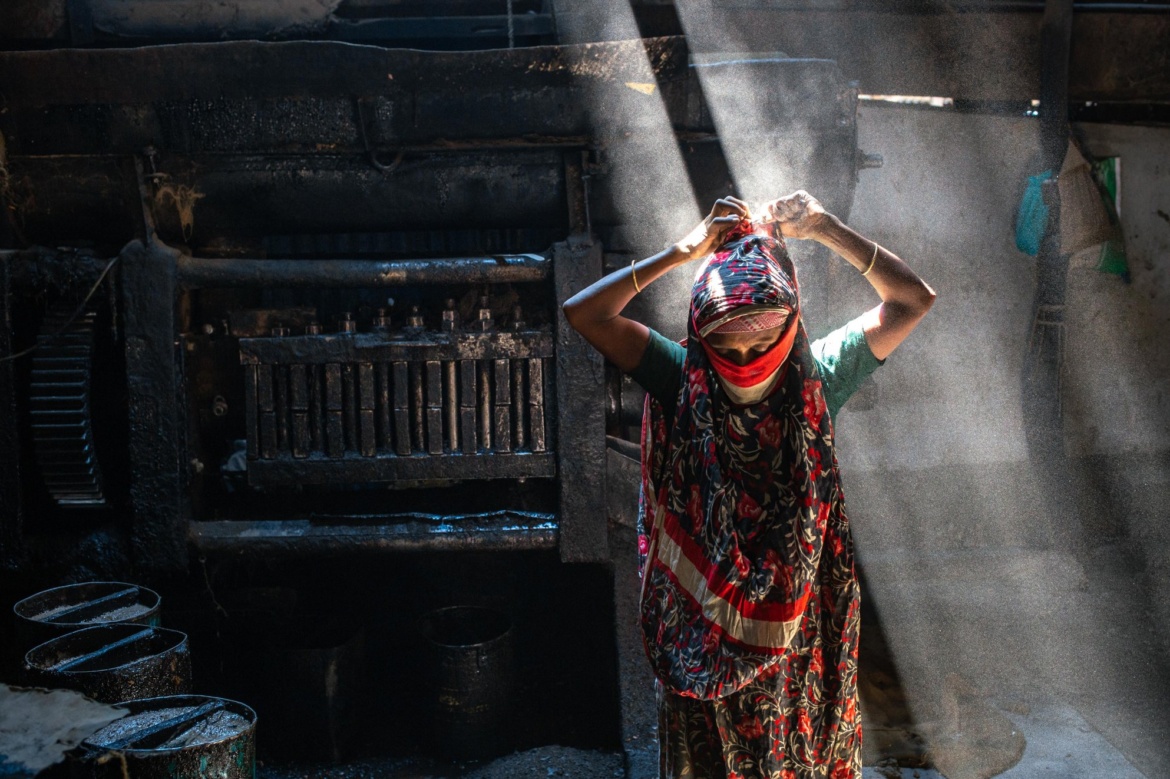
Counter-Records: Imaging Law, Gender, and Justice
A new global virtual photographic exhibition from This is Gender and Global 50/50
A Visual Reckoning on Power, Proof, and the Politics of Justice
Global 50/50 and our visual storytelling platform, This is Gender, present Counter-Records: Imaging Law, Gender, and Justice, a new global virtual exhibition exploring how law and justice are lived, contested, and reimagined through a gendered lens.
Launching ahead of Global 50/50’s forthcoming Law & Justice Report — the first global review of gender equality across the law and justice sector — Counter-Records turns to photography as a site of testimony, resistance, and imagination.
Photography as Evidence, Photography as Dissent
In law, an image can testify. It enters the record as evidence, carrying the weight of proof and persuasion. Yet beyond the courtroom, photographs testify differently — not to confirm, but to question; not to fix meaning, but to open it.
In an age of rollback and control, rights are curtailed, protest becomes a site of surveillance, and the law polices not only behaviour but bodies themselves. In this climate of escalating biopolitics, the photograph becomes a counter-record — not an instrument of the state, but a tool of dissent.
Since its inception, This is Gender has mobilised photography as a tool of inquiry — to see differently, challenge power, and catalyse change. Counter-Records builds on this practice, turning our lens toward how deeply gender inequality is embedded within global legal infrastructures.
A Global Call, A Collective Vision
Counter-Records brings together photographs selected from a global open call spanning more than 35 countries, reviewed by an international jury of artists, curators, and advocates. Across diverse visual practices — portraiture, documentary, abstraction, and experimental form — the works expose how systems of law and governance are gendered at every level: who is seen and who is silenced, believed and discredited, protected and punished.
As participating artist, Claire Thomas, reflects:
“A visual language of justice, for me, isn’t about depicting courts or dramatic legal moments. It’s about revealing the everyday ways justice is lived — in how we care for one another, how we resist harm, and how we imagine collective strength.”
Together, the artists map the collisions between fairness promised and fairness denied — from the architecture of the courtroom to the intimacies of care, fear, survival, and joy. The exhibition forms a living counter-archive: a record of resistance, rupture, and re-imagination across the gender spectrum, and an invitation to see justice otherwise.
Justice, Seen From Five Angles
The exhibition unfolds across five interlinked thematic lenses, tracing how law and justice operate across institutions, environments, relationships, bodies, and imagined futures:
- Architectures of Power — How institutions shape justice and reproduce inequality
- Geographies of Justice — How law is written into landscapes, borders, and environments
- The Social Contract — Where justice is lived through relationships, belonging, and solidarity
- (Em)Bodies of Evidence — How law inhabits the flesh, and how bodies become testimony
- Radical Visions — Imagining justice otherwise, through creativity, refusal, and collective possibility
A Turning Point for Gender and Justice
The launch of Counter-Records comes at a defining historical moment. Movements for gender justice are confronting intensifying political backlash, the erosion of rights once considered secure, and growing attempts to control bodies, movement, and dissent.
This exhibition calls not only for attention, but for engagement. To picture justice, it suggests, is not simply to document it — it is to imagine it, question it, and build it into being.
Explore the ExhibitionView & Download the Press Release