
Organised, networked, profitable: understanding the assault on gender equality
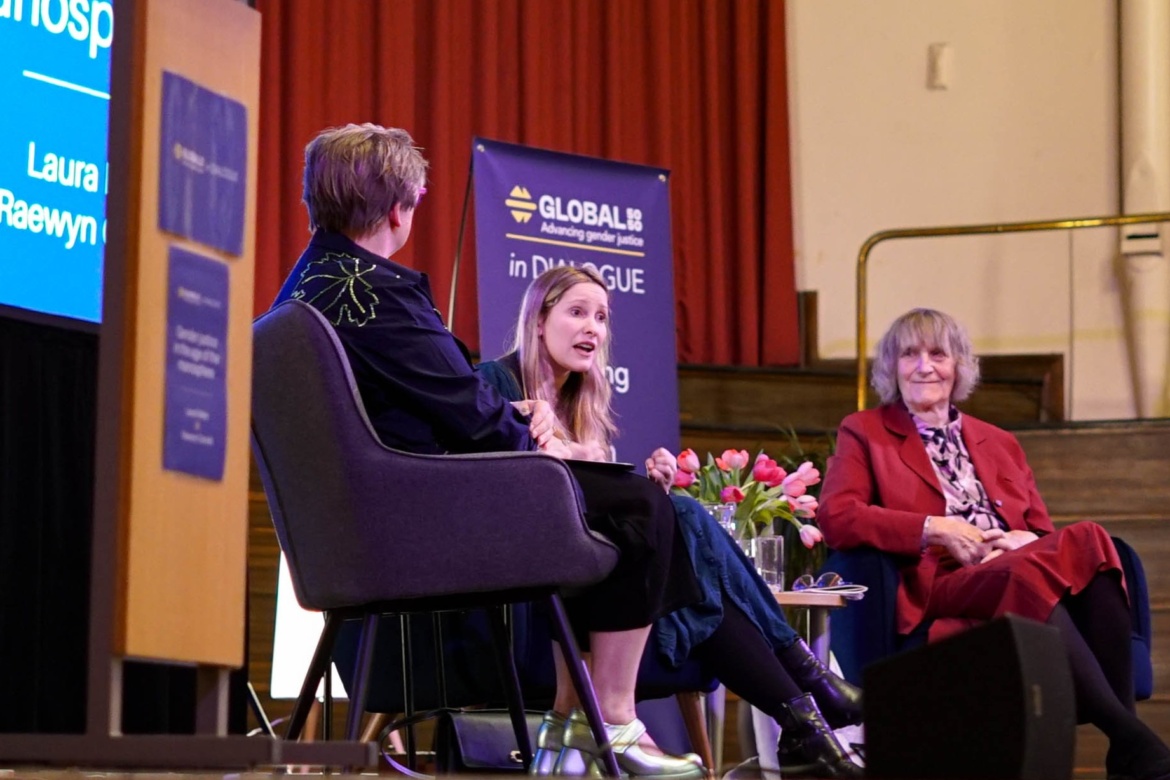
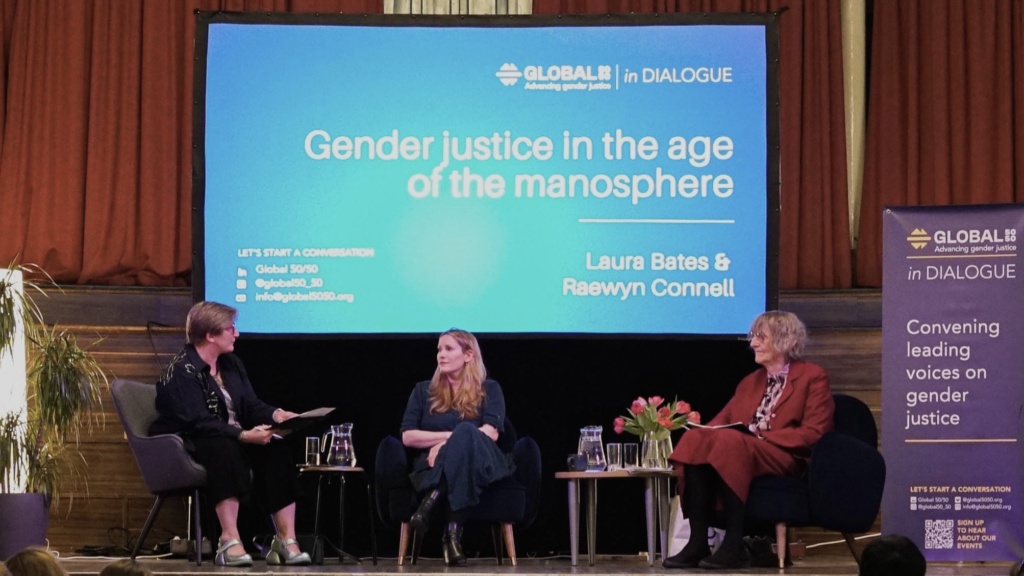
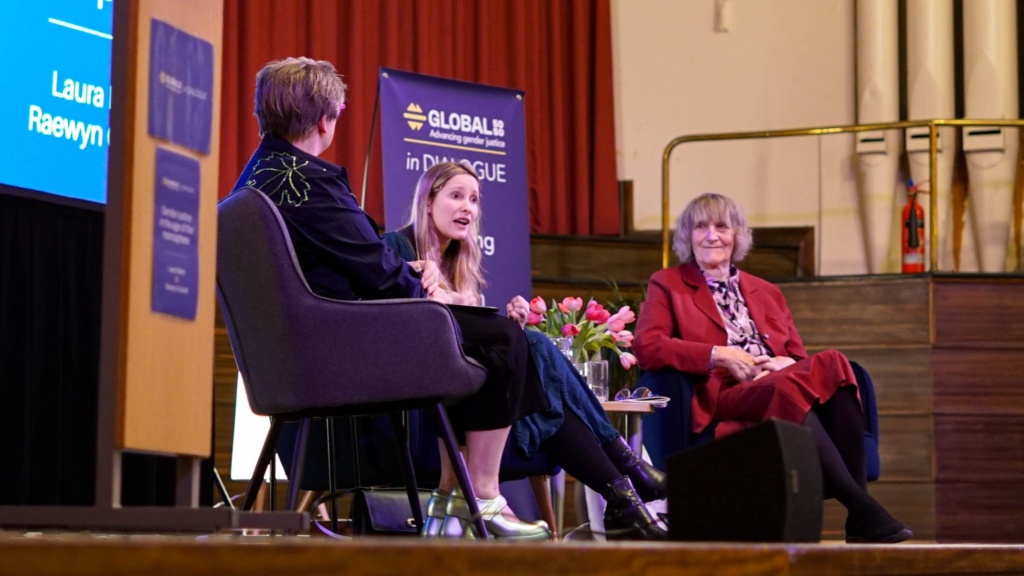
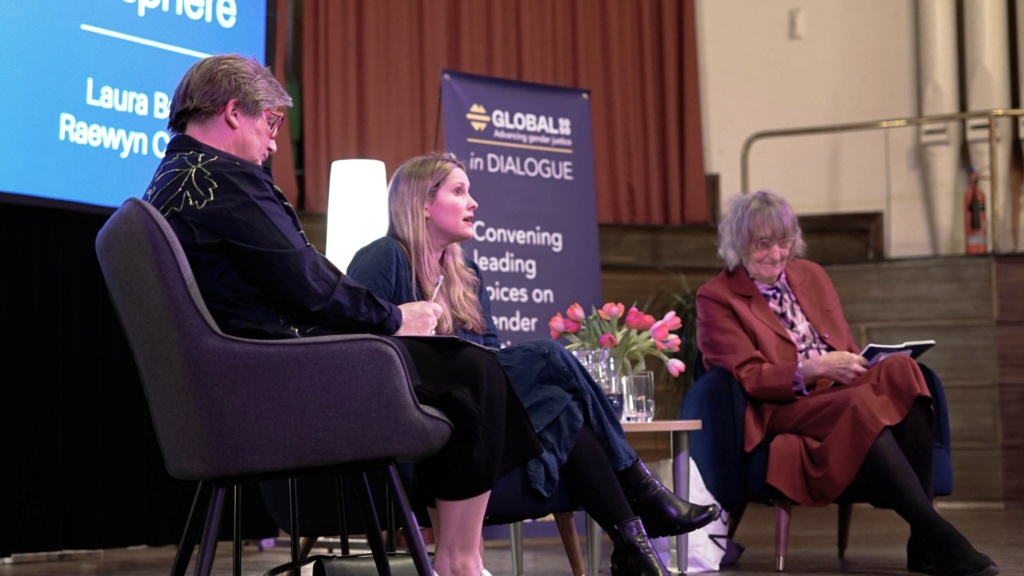
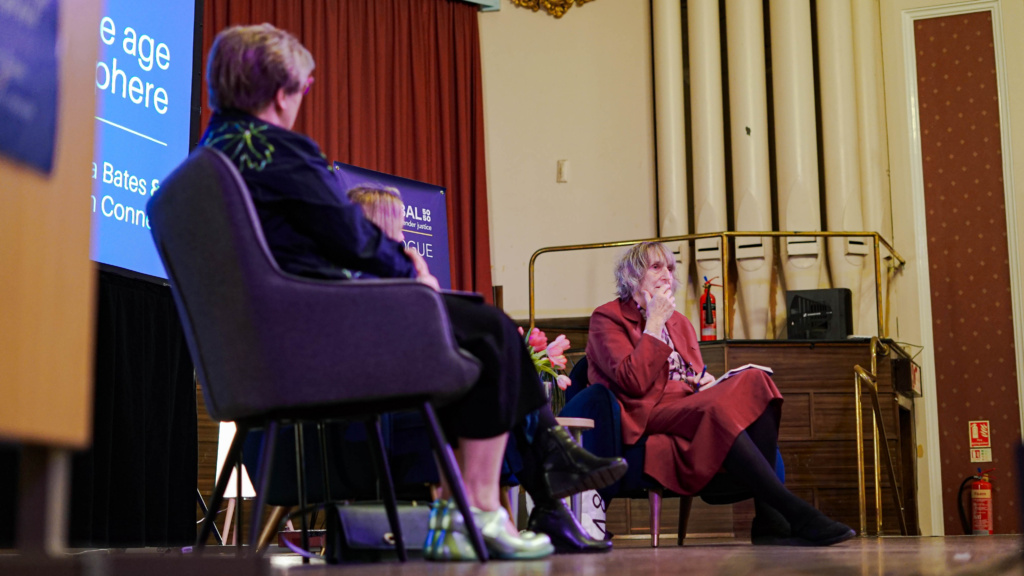
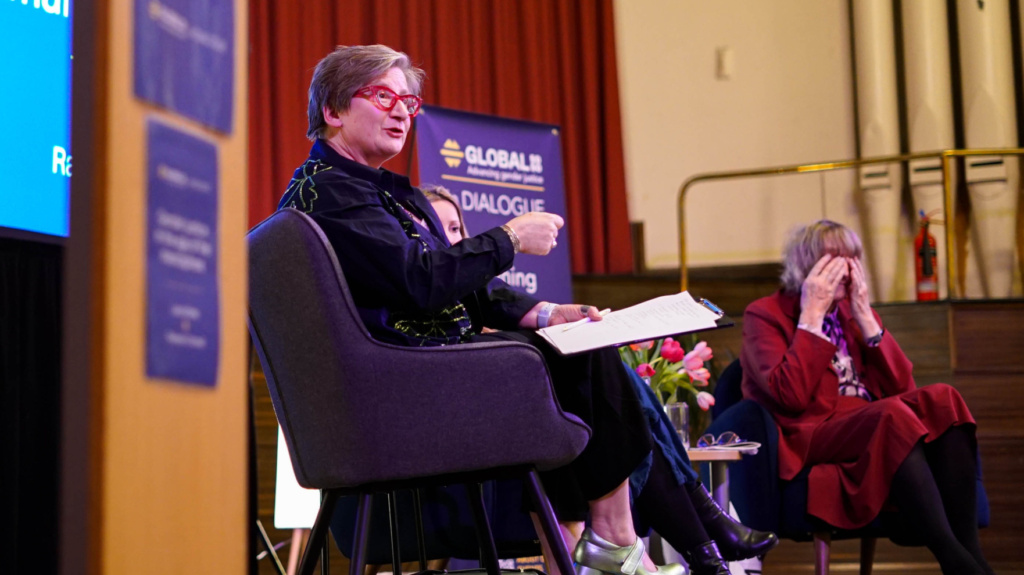
In March 2026, Global 50/50 launched its In Dialogue series — a new convening space for the urgent conversations that gender justice demands. For our inaugural event, we brought together feminist sociologist Raewyn Connell and activist and author Laura Bates, in conversation with our co-CEO Sarah Hawkes, to examine the rise of the manosphere and what an adequate response requires. This piece draws on that conversation.
Are we even looking in the right places?
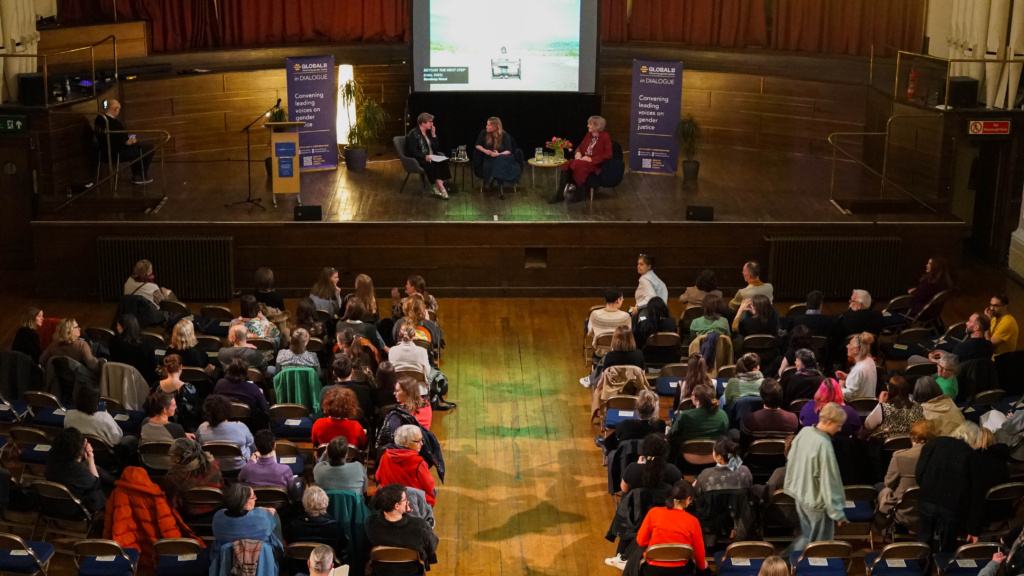
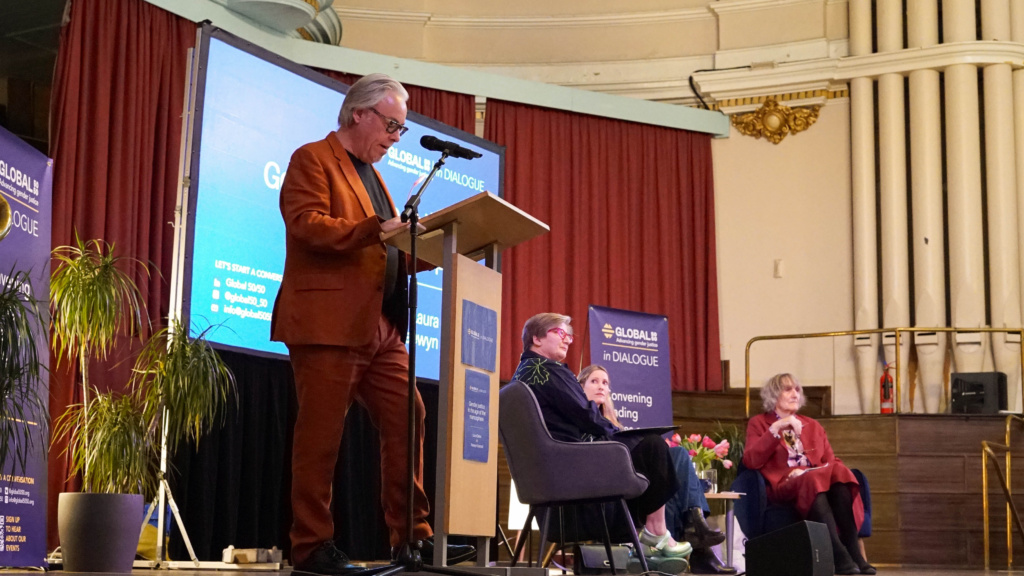
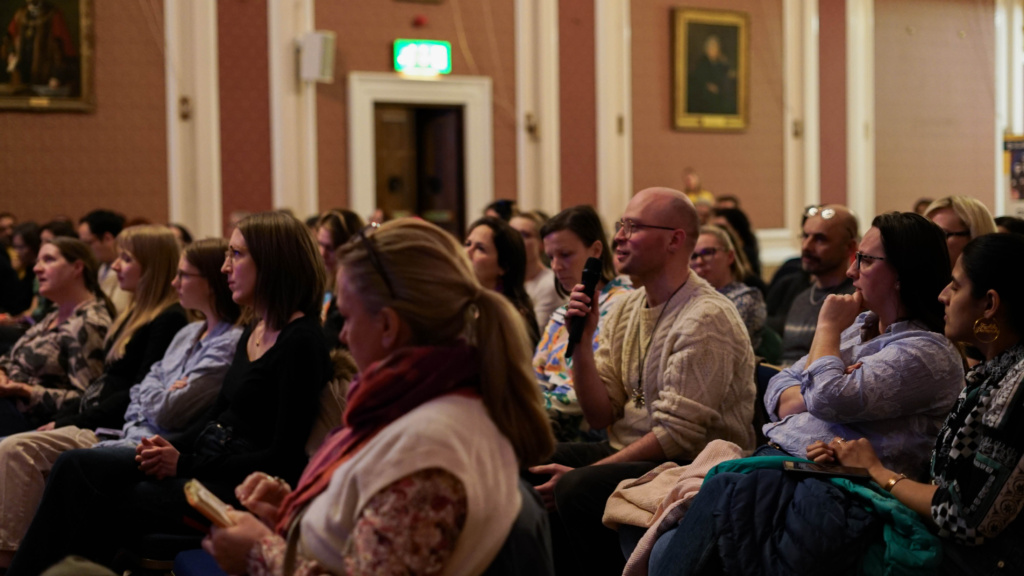
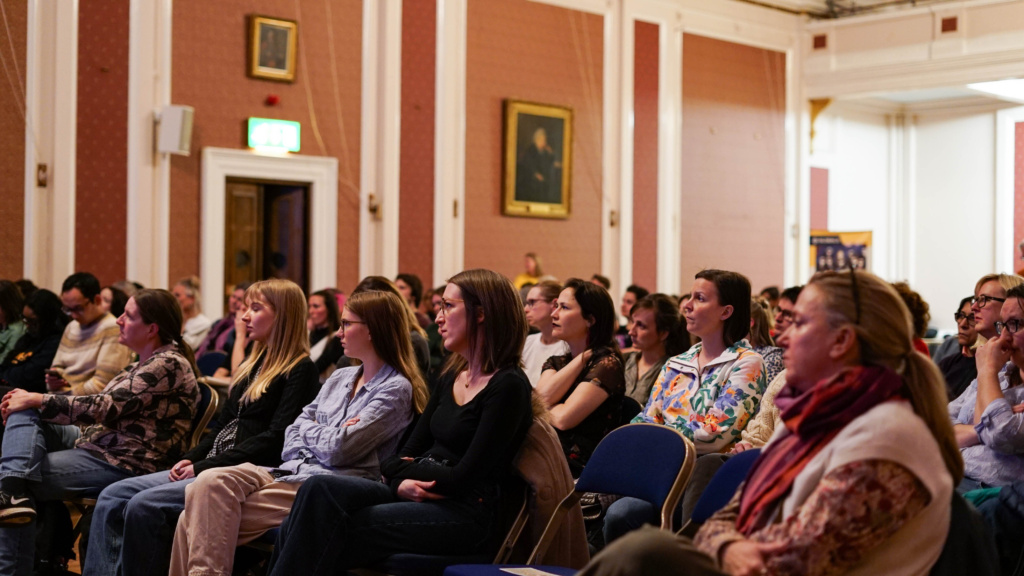
That was the challenge put to a full room in Cambridge by Kent Buse, co-CEO of Global 50/50, opening our inaugural In Dialogue event. It set the tone for an evening that was, by turns, alarming, clarifying and — against the odds — genuinely hopeful.
The conversation that followed cut to the heart of one of the most pressing questions in gender justice today: how do we understand, and how do we respond to, the organised assault on gender equality playing out in our digital spaces — and what does it mean for all of us?
Because this is not a backlash. “That word makes it sound reactive, temporary, maybe inevitable,” Buse said. “What we are seeing is none of those things. It’s organised, it’s networked, and in many cases it’s highly profitable. And our responses are not anywhere near commensurate with the scale and the sophistication of what we are against.”
We were already in crisis
Laura Bates — founder of the Everyday Sexism Project and author of nine books including her latest, The New Age of Sexism — opened by challenging a widespread assumption: that technology invented misogyny.
“There is a mistaken assumption that tech has come along and social media, and now AI, created or invented misogyny,” she said.
“It’s so important to start by recognising that we were already in crisis. Even if you take the online world out of it altogether.”
In the UK alone: only four in ten elected MPs are women; there are almost three times as many men named John running FTSE 100 companies as there are women in those roles altogether; and approximately 100,000 women experience rape or attempted rape every single year, with police recording around a million incidents of violence against women and girls annually.
“We were already existing in a situation of crisis,” Bates said, “not least in the space of male violence against women and girls.”
Social media and AI did not create this landscape. They arrived and amplified, reinvented and intensified the narratives underpinning it.
A culmination of unique moments
What makes the current moment different, Bates argued, is not misogyny itself — it is the conditions under which it is now spreading.
“What we are seeing that has never happened before in human history is a culmination of unique moments. The first is that we have a generation of non-digital natives parenting, educating, and caring for a generation of digital natives. And the second is the full-scale, algorithmically facilitated bombardment of that generation of young people with extreme and divisive attitudes that absolutely amount to forms of radicalisation and extremism.”
If a teenage boy signs up for a TikTok account today, it takes an average of just 23 minutes before the first piece of extreme misogynistic content is promoted into his timeline. Andrew Tate’s content has been viewed on TikTok alone over 11.4 billion times — more than the number of people on the planet.
“This is a deliberately facilitated, algorithmic bombardment that is entirely profit-driven,” Bates said. “It has created these perfect radicalisation machines. And they are subtle and effective.”
And yet, Bates was careful to challenge the narrative that boys are actively seeking this out. “There is a misconception that we have a uniquely misogynistic, inherently misogynistic generation of teenage boys. It’s nonsense.” The content reaches boys not through deliberate searching but through the ordinary mechanics of recommendation — fitness tips, financial guidance, relationship content — served up by algorithms finely tuned to escalate towards the extreme.
We also consistently fail, she argued, to name what this is. “When we see young men coming offline after having been radicalised by violence and hatred of women, and carrying out acts of mass violence, we don’t describe it as terrorism. And as a result, we don’t perceive them as having been groomed.”
That failure of naming makes it harder to see the scale of the problem — and harder to respond proportionately.
The manosphere is not contained to its most visible voices
Much attention focuses on the most prominent influencers — the men online selling toxic masculinity and misogynistic lifestyles to millions of followers. But Bates was clear that this is only part of the picture.
“Andrew Tate is very much the tip of an iceberg.”
The content spreads far beyond dedicated manosphere spaces — through gaming websites, chat rooms, bodybuilding forums, and mainstream commentators who sanitise and slightly veil these ideas, and in doing so widen the window further.
The manosphere, she also argued, is “deeply foundationally racist” — its ideologies inseparable from the wider rise of far-right nationalist movements.
“It isn’t a coincidence that we are seeing the rise of these nationalist movements at the same time that extreme misogyny is taking hold so effectively.”
AI is not a future risk — it is a present one
Artificial intelligence is introducing a new and rapidly escalating dimension of harm that is already here.
Millions of women are being targeted by AI tools deliberately designed to facilitate abuse at scale and to push them out of public spaces, journalism, activism and politics. But the harm extends well beyond tools designed explicitly for abuse — into recruitment, financial services and healthcare, where AI systems trained on biased data are replicating and intensifying existing inequalities.
“Wherever we look in our society,” Bates said, “in areas where we had an existing crisis, AI is now intensifying it.”
Only 12% of AI researchers globally are women. Women receive just 2% of venture capital funding for these products. “And yet they are building the world that none of us have any choice about living in.”
“I don’t think enough people do know. And I think that until we make sure that people know, it will be very difficult to act.”
History is both warning and resource
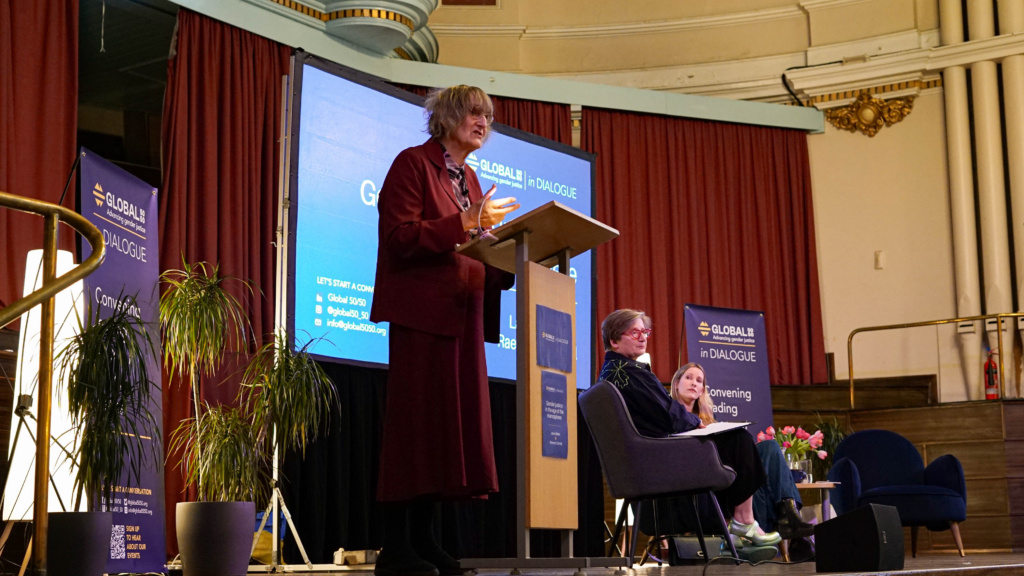
Raewyn Connell — feminist sociologist, Professor Emerita at the University of Sydney, and one of the world’s leading theorists of gender and masculinity — placed the current moment in its longer historical context, and in doing so offered both a sharper analysis and a more grounded form of hope.
“We are living in a time of trouble for gender equality movements,” she said. “My generation assumed that the climb up the mountain would be a steady one. That assumption has turned out to be wrong.”
The scale of what women have gained globally over the last two generations is, she argued, genuinely significant — in education, health, life expectancy, income and employment. But these gains have not been matched by a transformation of the institutions through which power is actually organised.
Patriarchy, Connell emphasised, is not a single uniform system. It embodies different patterns of masculinity, hierarchies among men as well as between men and women, and continuous internal politics over who holds power and who is pushed out. It is often in that gap — that sense of displacement and unmet expectation — that the manosphere finds its most receptive audience.
The manosphere is a struggle over masculinity — and who it serves
The manosphere, she argued, is not simply men versus women — but a struggle over which version of masculinity prevails, and who benefits from it. Those pushed out of positions of privilege and wealth are as much a part of this picture as those pushing in.
What we are witnessing, she argued, is not a pendulum swing but an attempt at a fundamental reshaping of the gender order. “They are hoping to build a whole society which is more unequal, more oppressive, and more violent than the society we’ve been building for the last two generations.”
There is genuine cause for optimism
History shows that even under the bleakest conditions — including the reversal of first-wave feminist gains under fascism — better institutions have been built. The welfare states that emerged in the post-war period, the developmental states that inspired post-colonial movements around the world, were built in the aftermath of catastrophe.
“We should never forget the resources that have been created by the social struggles of the last two generations — by women’s movements, by lesbian movements, by trans movements and others. We are still in a position to build on them.”
Boys’ attitudes, she added, are not fixed. Positive relationships, good education, good examples and genuine alternatives matter enormously.
“We need to remain ambitious about constructing better institutions and social orders. We need agendas for a better world and the energy to build constructively.”
But families cannot solve this alone — and shouldn’t have to
A thread running through the entire evening was the inadequacy — and the unfairness — of responses that place the burden of this crisis on individuals and families.
“There is no good solution there for parents to make,” Bates said. “But there is a solution which involves holding tech companies accountable for keeping platforms safe so that parents don’t have to make that impossible decision.”
Over the past two decades, global tech firms have run extraordinarily well-funded lobbying campaigns to convince governments that meaningful regulation is impossible in their sector. “Development and opportunity for whom?” Bates asked. “If you want everybody to benefit from the enormous potential that this technology offers, then we need good, tech-positive, common sense regulation and guardrails — at the point of rollout to the public, at the point of procurement by state agencies.”
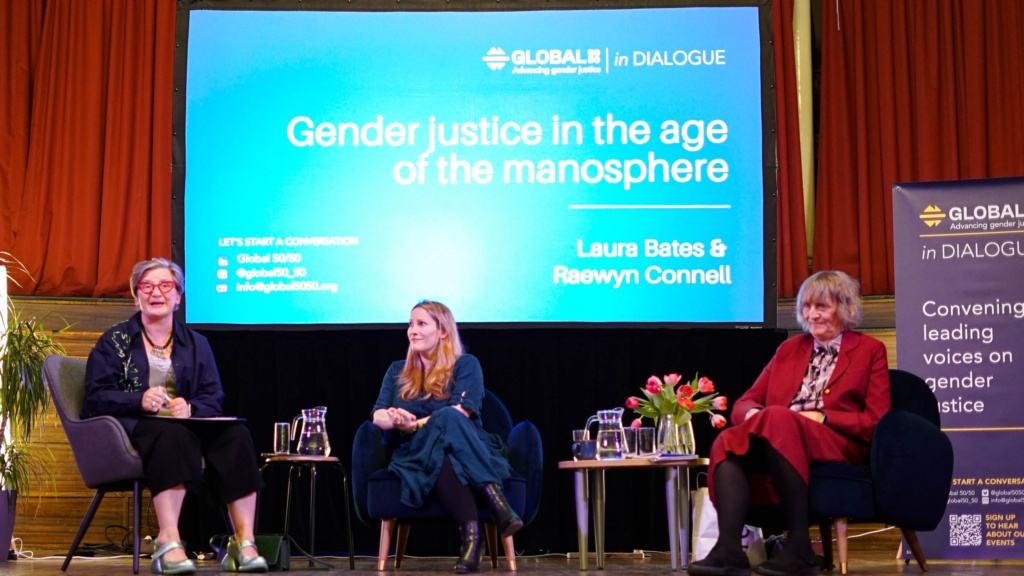
This is a public health risk — and demands an all-of-society response
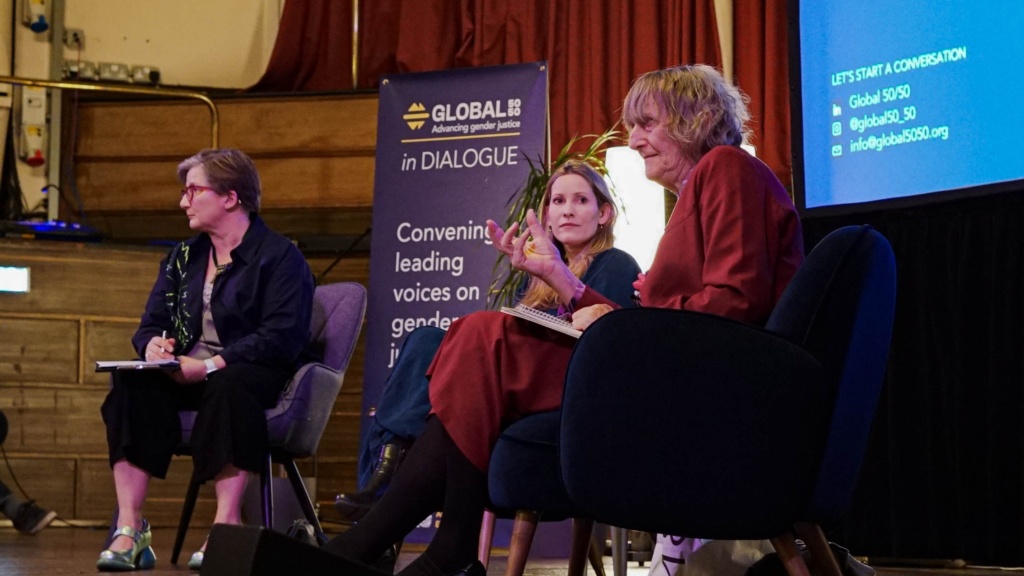
Bringing the threads of the evening together, Sarah Hawkes — co-CEO of Global 50/50 and co-chair of the Lancet Commission on Gender and Global Health — returned consistently to one central question: what does a response commensurate with the scale of this problem actually look like?
Global 50/50’s position is clear: extreme online misogyny must be treated as a public health risk. Not as a rhetorical gesture, but as a practical reframe that shifts the question from how to punish individual bad actors to how to prevent harm at scale — and who bears responsibility for doing so.
“Treating the manosphere as a public health risk would unlock coordinated action across governments, regulators, schools and tech companies,” Hawkes said, “and shift the focus from reaction to prevention.”
“What’s really frustrating,” Bates said, “is how effective manosphere ideologies have been in convincing people that gender equality is a zero-sum game. The clearest example lies in male mental health — because often online you will see these problems weaponised by men who have no interest in finding solutions that support men and boys, but every interest in using those statistics to silence the voices of feminists.”
Gender equality is not a zero-sum game. It is a prerequisite for the wellbeing of everyone.
As Sarah Hawkes put it: “Progress is not linear — we are all on a seesaw.”
And as Raewyn Connell reminded the room: the question is whether we have the vision and the energy to build them now — deliberately, ambitiously, with a clear picture of the world we are trying to create.
If we treated this as a public health risk, our response would look very different. That is precisely the point.
This conversation is just beginning
Monday’s event was the first in Global 50/50’s In Dialogue series — a space for the conversations that gender justice demands, convening leading thinkers, advocates and decision-makers to examine the forces shaping equality today and to ask what an adequate response looks like.
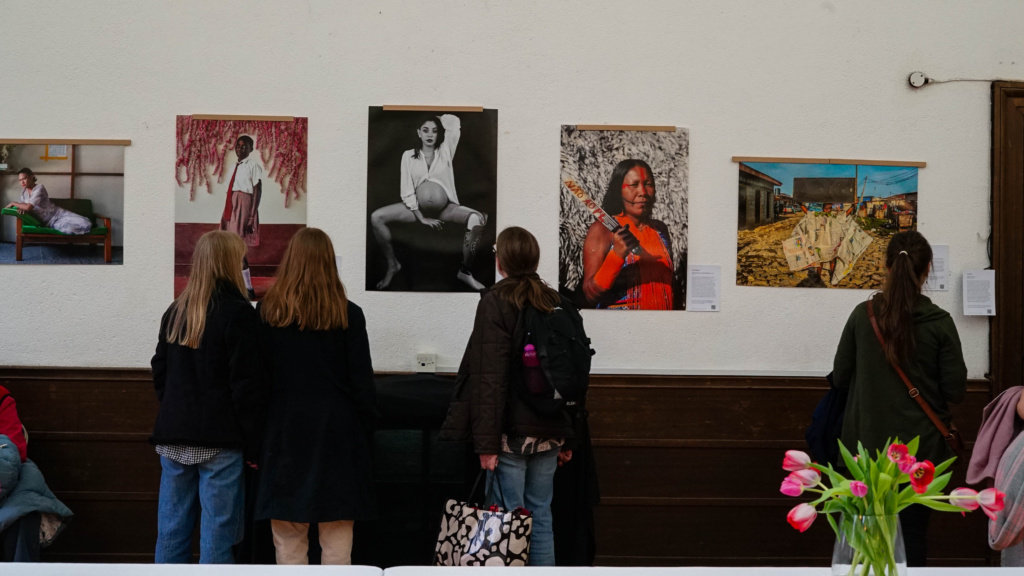
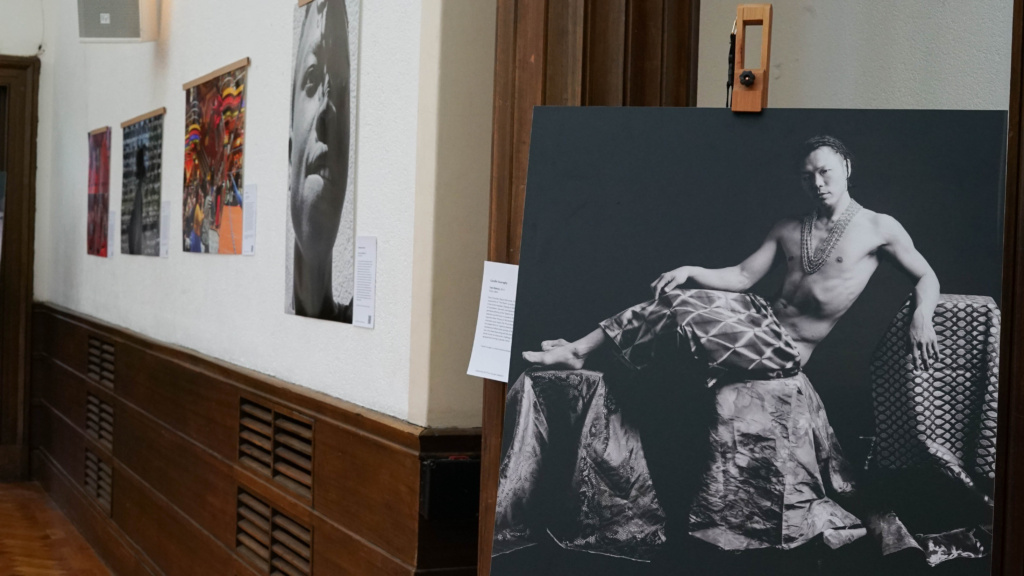
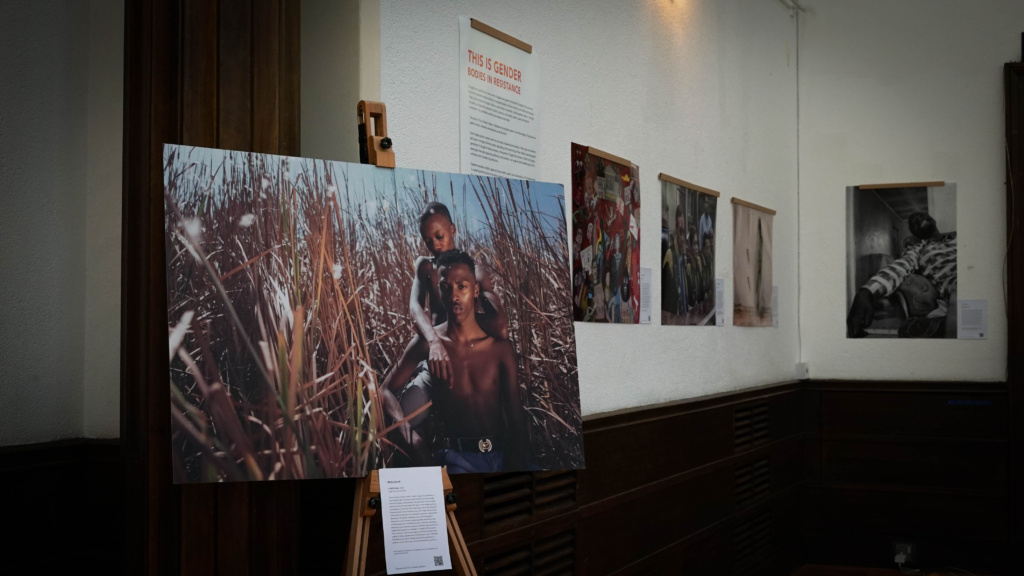
The event closed with a networking reception and the latest This is Gender Exhibition, ‘Bodies of Resistance’, showcasing images from across the collection that remind us that the politics of gender are never confined to policy spaces – and that claims for gender justice happen all around us, all the time. In homes, bodies, workplaces, streets and online, loud and collective, quiet and persistent, in acts of care, protest, survival, and self-expression.
Over the coming days, we will be sharing further content from the conversation, including videos from the evening.
To stay connected and hear about future In Dialogue events, sign up to our mailing list.
Sign up to receive our newsletter