
Who sits at the top of our justice systems shapes whether justice serves everyone equally. Too often, the very institutions tasked with upholding fairness reproduce the inequalities they claim to challenge.
At a time of democratic backsliding and sustained attacks on women’s rights, transparency and accountability in the law and justice sector are more urgent than ever.
Global Justice 50/50’s inaugural Report Gender (In)Justice? is the world’s first independent, systematic assessment of gender equality, fairness and equity across 171 organisations active in global law and justice. It covers seven subsectors: courts, law firms, intergovernmental bodies, international NGOs, legal professional associations, commissions, and funders.
Using publicly available data, the Report examines organisations’ public commitments, workplace and governance policies, and leadership representation – revealing who holds decision-making power, whose voices are missing, and whether justice institutions live the values they are meant to defend.
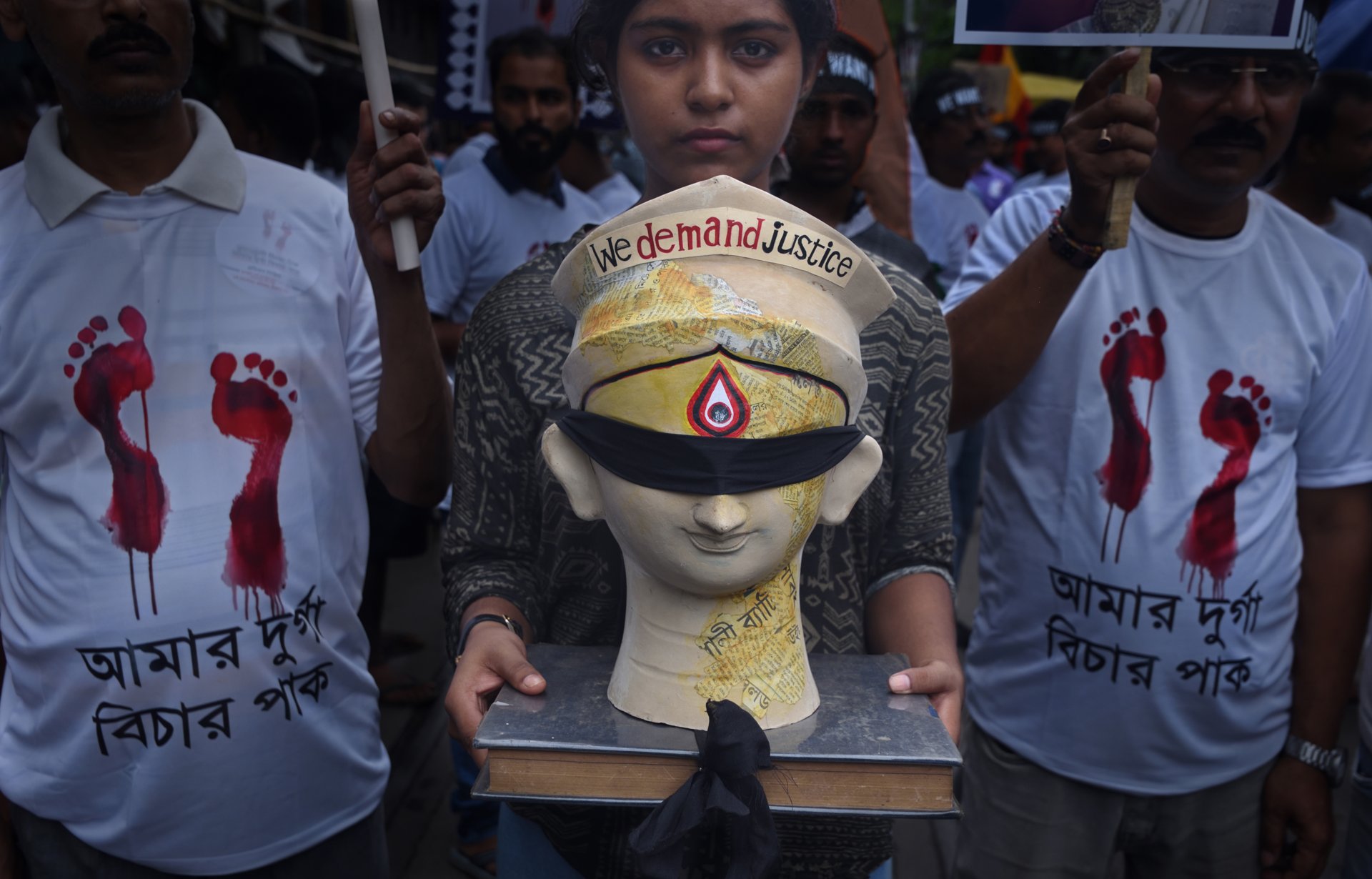
Kolkata, India. 2025.
Rajesh Dhar
Key findings
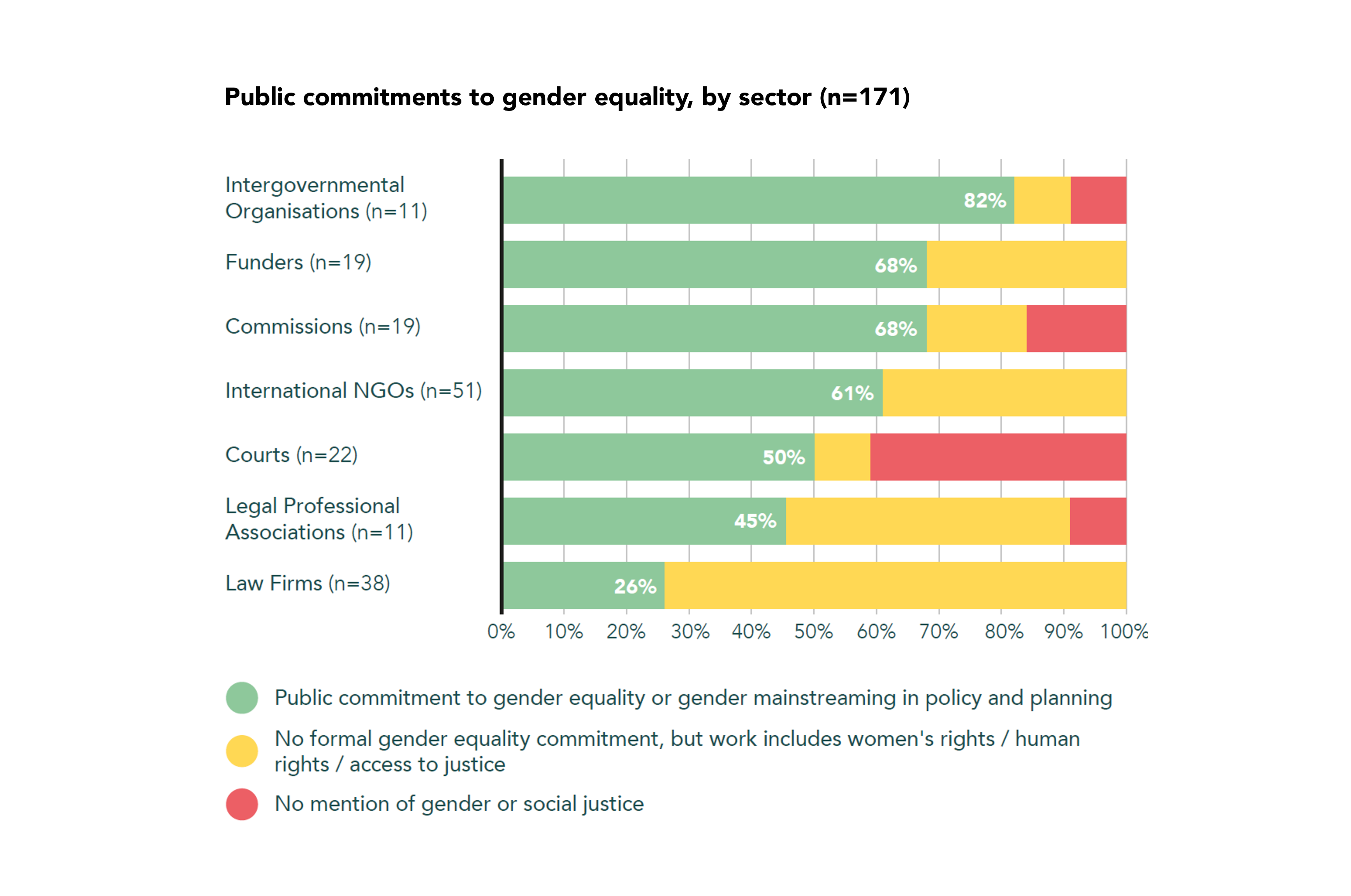
1. Half of the organisations assessed state a public commitment to gender equality, but policies to advance these commitments are frequently absent.
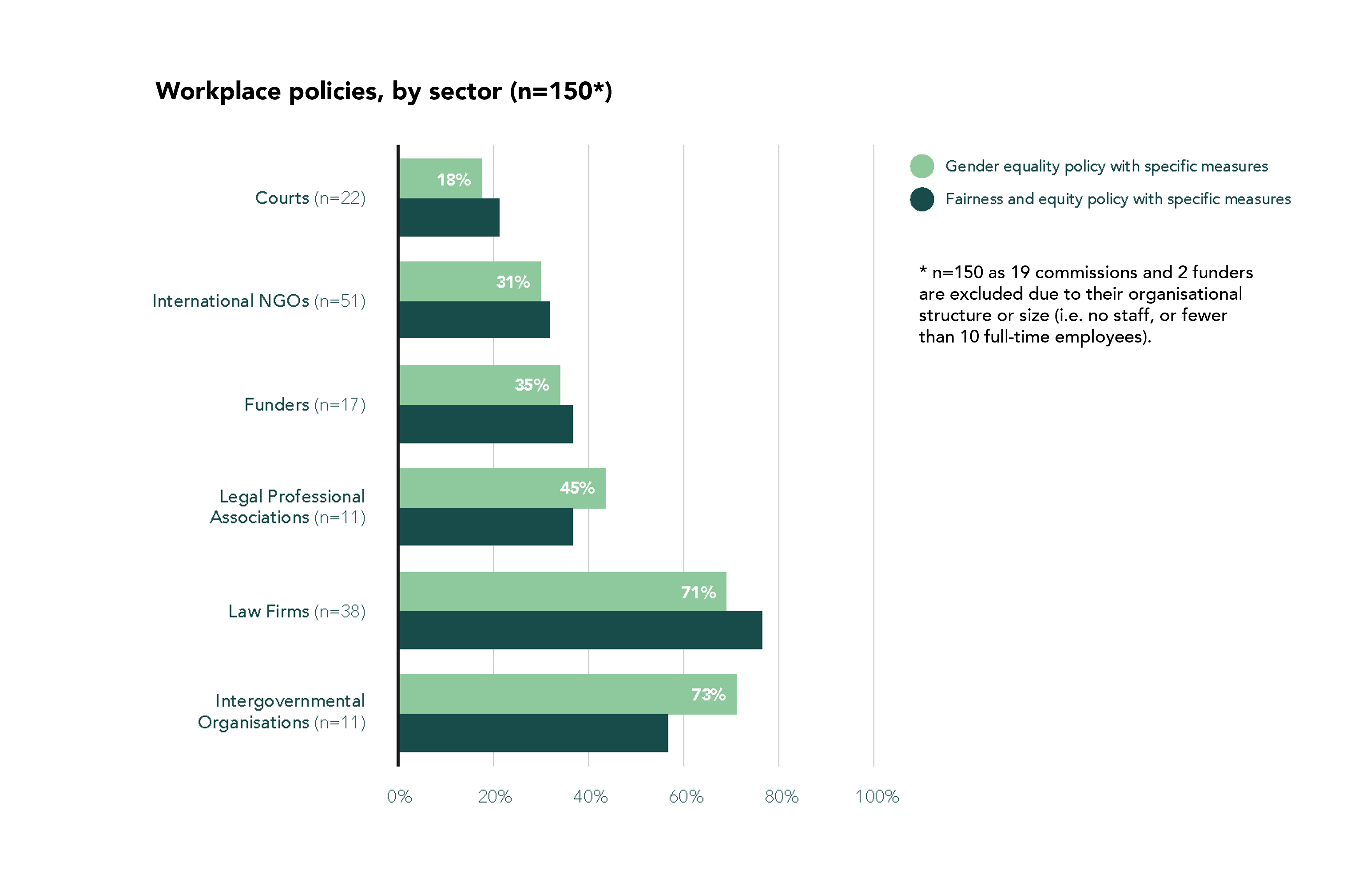
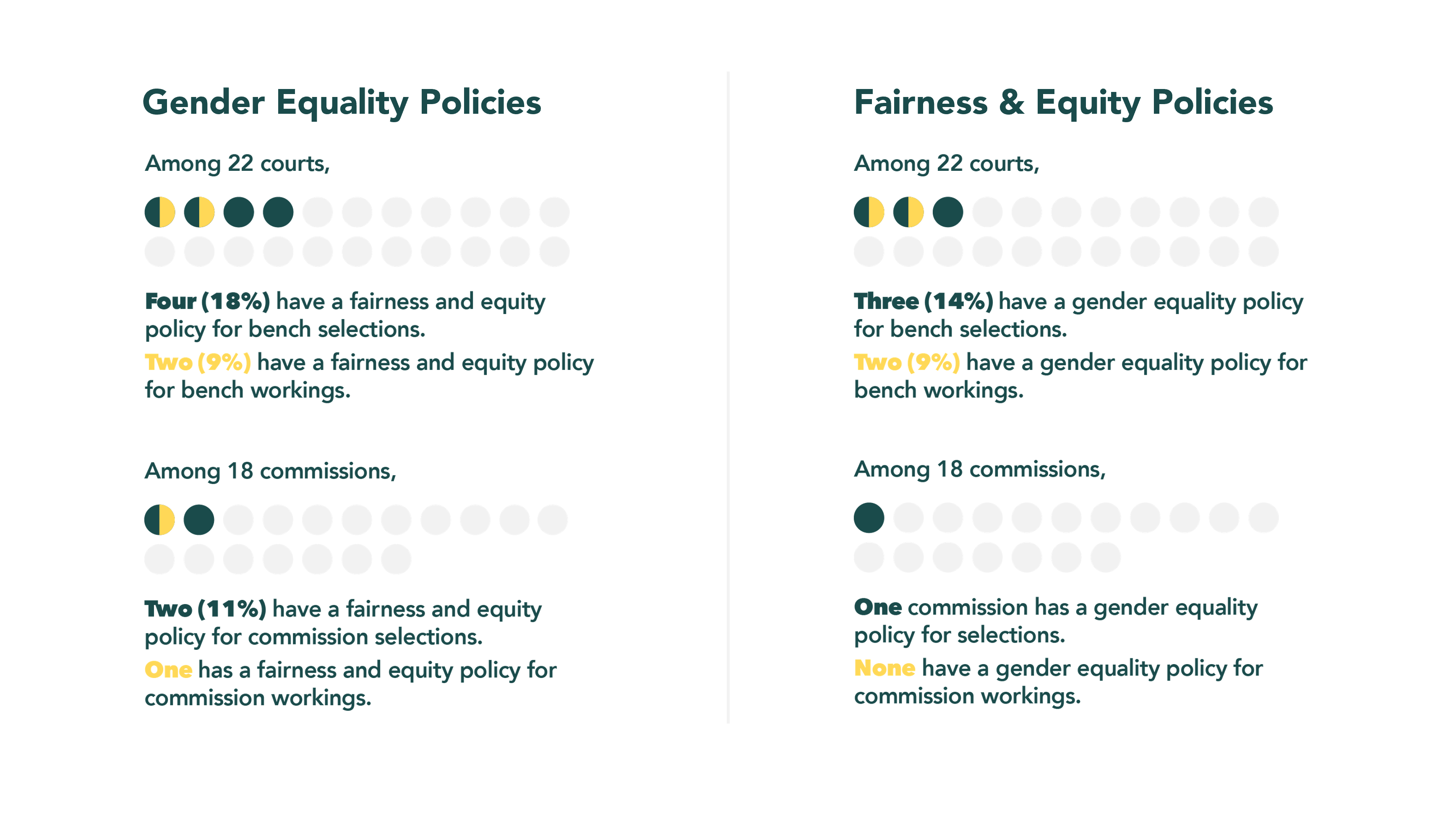
2. Few appointed bodies – courts, commissions or boards – have policies to guide gender equality, fairness and equity.
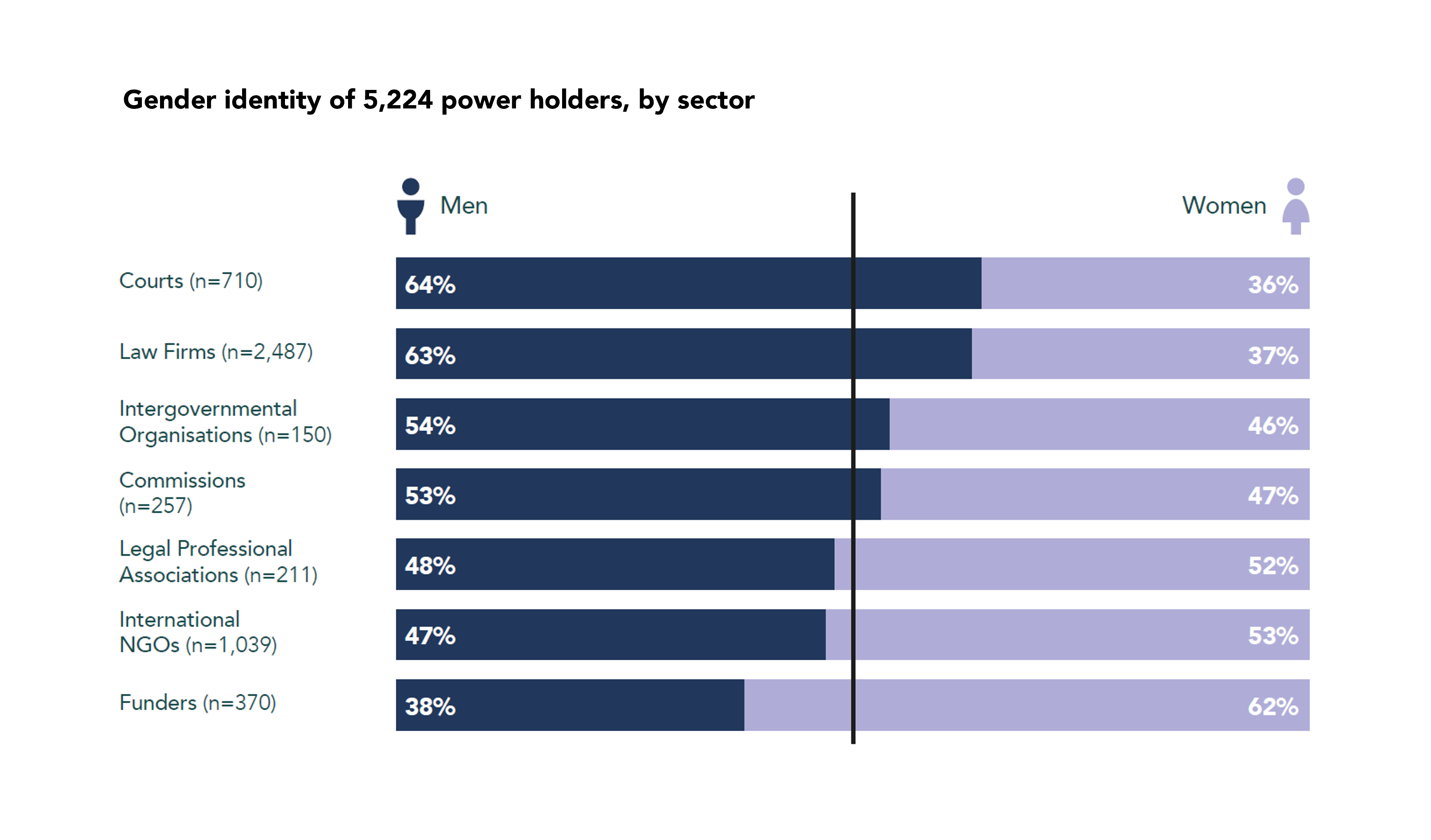
3. With women constituting 43% of the 5,224 power holders in our sample, gender parity appears within reach – but this hides greater disparities in traditional hubs of legal power such as courts and law firms.
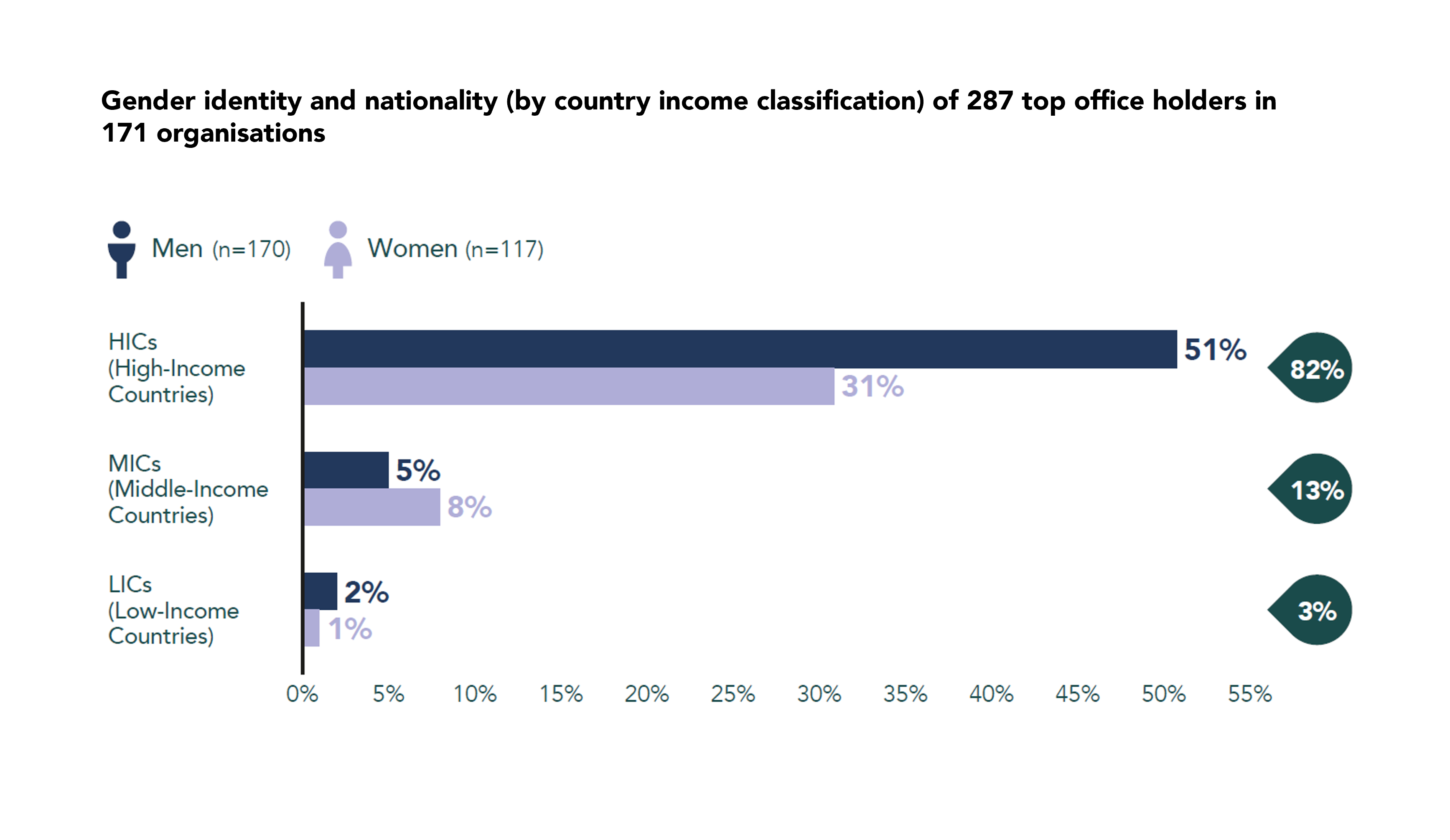
4. Fewer than 1% of 302 highest offices are held by women from low-income countries.
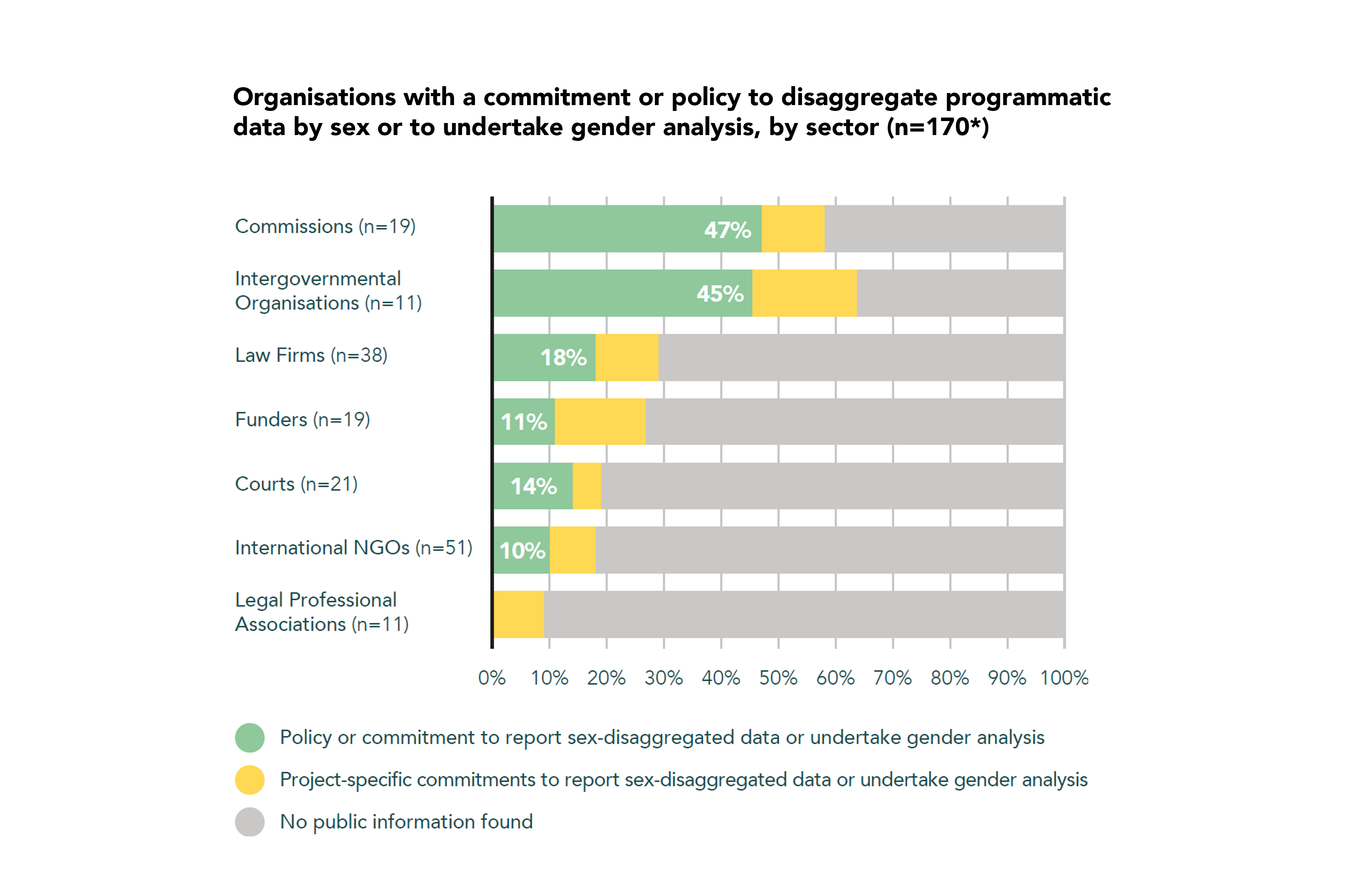
5. Fewer than one in five organisations assessed are committed to understanding who is, and who is not, being served by their systems.
Understanding Your Organisation’s Score
Type in your organisation’s name or use the dropdown menu to view your profile and performance.
Iwaya Lagos Nigeria. 2021.
Ismail Odetola
Explore the Report
2026 Global Justice 50/50 Report
- Foreword from Her Excellency Ms. María Fernanda Espinosa Garcés
- About the Report
- Word from the Collective
- Gender injustice in the justice sector
- Our findings
- Annexes
Explore our findings for each subsector here
LEADERSHIP IN THE LAW AND JUSTICE SECTOR
Drawing on data from Gender (In)Justice?, our new interactive data dashboard exposes how leadership power is concentrated across the law and justice sector worldwide – revealing who occupies decision-making roles, and whose voices remain noticeably absent.
Explore the Law & Justice Leadership DashboardCAREER PATHWAYS IN THE LAW AND JUSTICE SECTOR
Use our interactive career pathway tool to see who makes it to the top in the law and justice sector. To get started, select the criteria on the left to explore the gender and nationality of leaders in the full sample and within each of the seven subsectors reviewed in Gender (In)Justice?.
Data presented is for 1,895 individuals who hold senior positions in the 171 organisations reviewed in the Gender (In)Justice report. These include presidents of courts, justices, head commissioners, CEOs, board chairs and board members. Details on the sample can be found on page 20 of the report.A deeper dive: resources
AMPLIFY THE FINDINGS
Press
TOWARDS A GENDER-EQUAL LAW & JUSTICE SECTOR
Achieving gender justice in the law and justice sector demands more than incremental improvements. It requires a fundamental shift in how institutions confront power, accountability, and inclusion. The path forward calls for bold action: adopting and publishing robust gender equality, fairness and equity policies, investing in disaggregated data, and putting commitments into practice. The moment for decisive action is now, and the sector has both the responsibility and the opportunity to lead.
Global Justice 50/50 exposes how justice systems can speak the language of equality while still reproducing inequality from within. This first Report sets a bold benchmark, and returning to this independent analysis in two years will be vital to track who holds power, who is still excluded, and whether institutions are truly becoming more credible and inclusive.
Khadija Moalla, Senior Human Rights and Gender ExpertAt a time when progress on gender justice is increasingly fragile, or often not visible, Global Justice 50/50 brings methodological clarity coupled with data-driven findings to a complex field by systematically tracking how justice institutions uphold, contribute to – or undermine – gender justice. This consistent, independent evidence-based approach provides policymakers, advocates, and global thought leaders with reliable insights they can act on. The next pragmatic step would be to widen access to accessible justice for all #allmeansall. This would increase public trust in the judicial system. At the same time, we also must work to enhance judicial integrity.
A.H. Monjurul Kabir, Senior Governance Adviser and Justice ExpertAs backlash against gender equality intensifies globally, independent initiatives like Global Justice 50/50 play a vital role in holding justice institutions accountable to their human rights commitments.
Stacey-Leigh Manuel, Deputy Director of the Women’s Rights Division at Human Rights WatchProgressive law firms recognise that gender equality is fundamental. Clients demand diversity in the firms and teams they use, inclusive workplaces are more successful at attracting and retaining the best talent, and gender equality in leadership drives wider priorities, greater innovation and better decisions. Transparency and better data are essential if the legal sector is serious about addressing gender inequality – and that's what Global Justice 50/50 aims to deliver.
Matt Meyer, Managing Partner, Kingsley NapleyThrough clear data and compelling visuals, this landmark Report from Global Justice 50/50 offers a rare, accessible lens on gender gaps in global justice systems. It stands out in the sector by turning complex accountability questions into an urgent, practical call to action.
Hannele Hupanen, Former Strategic Partnerships & Resource Mobilisation Analyst, UNDPBeing a part of the justice system, a system that must represent all it governs, remains an exclusive and difficult industry to penetrate for so many. Understanding the obstacles to inclusivity is the only way that a chance to work in such a system becomes, not a privilege for the few, but an opportunity for all. This inaugural Global Justice 50/50 Report is an exciting key to unlocking that opportunity.
Joshua Purser, Barrister at No5 Barristers’ Chambers