
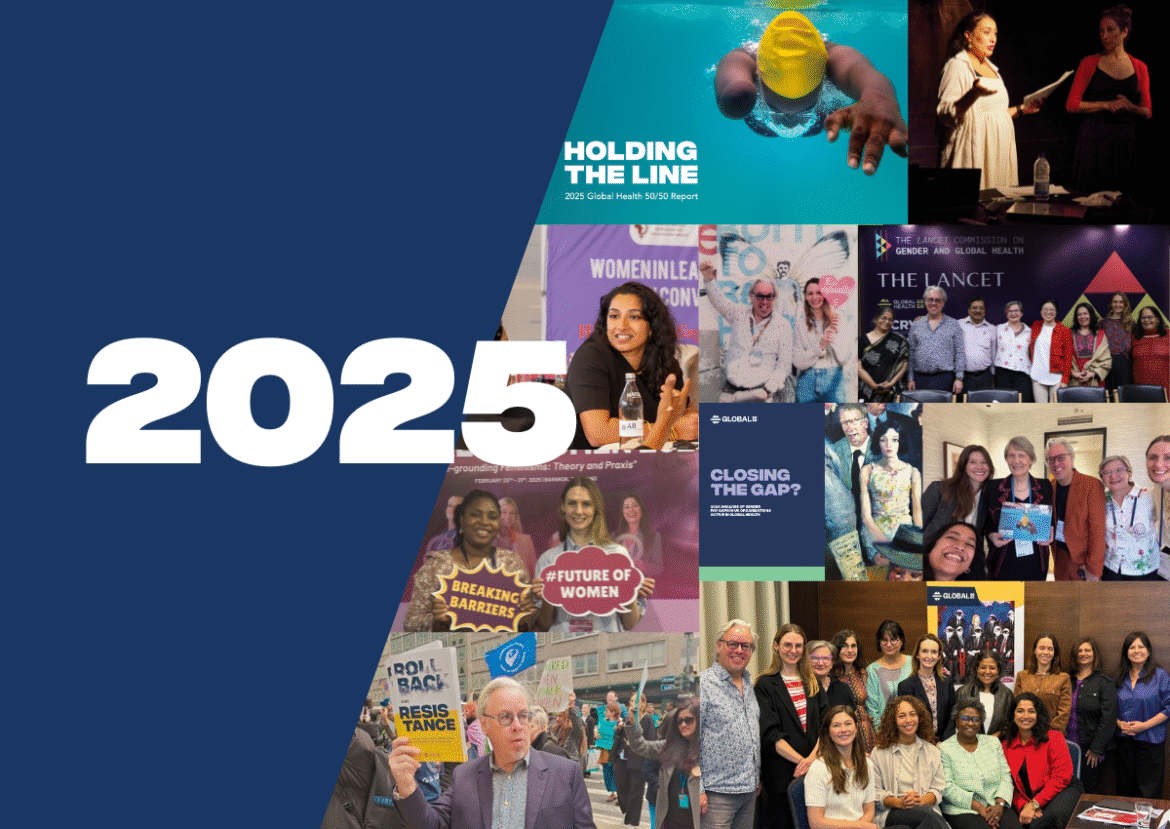
2025 in Review: Holding the Line for Gender Justice and Building a “Moral Revolution”
A year of rollbacks met with data, coalition-building, and a plan to turn resistance into renewal.
2025 will be remembered as a year of coordinated opposition to gender justice – and one of resistance that refused to yield. The manosphere grew louder; surveys showed waning support among young men for women’s leadership; and attacks on DEI, science, regulation, social safety nets, multilateralism, and international law intensified – amplified by the consolidation of authoritarian regimes. At the same time, grotesque patterns of inequality deepened, development cooperation both faltered and was weaponised, civic space narrowed, and AI turbo-charged mis/disinformation became the engine of that pushback.
Attacks on gender justice are not new. Hard-line conservative states have fuelled discord in international negotiations for decades, arguing that women and men’s roles are fixed by biology while denying the social, economic, legal, and political forces that shape gender inequality. In the past year, this regressive position has been emboldened through the actions of the US administration, with other governments echoing and advancing similar anti-gender arguments in global forums.
Against this backdrop, historian Rutger Bregman’s BBC Reith Lectures, “Moral Revolution”, urge a new wave of ambition, calling on institutions and progressives to move beyond cynicism towards action. At Global 50/50, we have tried to play our part by standing with partners to hold the line with evidence, accountability, and coalition-building – while devising the next steps toward gender justice.
Where we showed up
UN Commission on the Status of Women (CSW)
At CSW – marking three decades since the Beijing Platform for Action – we brought evidence to a tough reckoning on gender equality. Our briefing Rollback & Resistance and report Defying the Pushback documented how gender equality commitments were being diluted or reversed. The mood was one of shock and disbelief that regressions were happening in plain sight. Our through-line: evidence, transparency, and broad coalitions remain the strongest antidote.
Leadership on the Lancet Commission on Gender and Global Health
Having led the work of the Commission over several years, we chose early 2025 to launch its key report and to take it global with Commissioners and colleagues in Delhi, Dakar, Geneva, Berlin, Adelaide and Sao Paolo. The Commission’s distinctive contribution was to shift the narrative from “add women and stir” to “change the system”. It framed gender as power over what evidence is produced, how money flows, who leads, and who gets care, and it translated that diagnosis into actionable levers: governance and accountability standards, gender-responsive financing and metrics, and leadership parity.
Global convenings to turn evidence into action
We created spaces that turn data into new ways of seeing – and into collective action for gender justice. At Reconference in Kathmandu, our teach-in showed advocates how to use data and evidence in their organising. At the African Women Lawyers Association plenary, we previewed our justice dataset and amplified the call for representation, transparency, and reform. On the sidelines of the World Health Summit in Berlin, we convened gender justice advocates on measuring inclusive, fair, and feminist leadership principles. And with the UK’s Royal Society of Arts at its Osaka Expo, we advanced visual ethics through the masterclass “Reimagining the Development Frame: Gender, Power & Visual Justice.”
What we produced
Holding the Line 2025: the global health report and index
Our annual state-of-gender-equality assessment – now in its eighth year – tracks leadership, policies, and transparency across global health. Between 2024 and 2025, for the first time, we recorded regression across every variable we measure, marking a departure from the uneven but real progress of recent years. This included a decline in public commitments to gender equality, from 84% of organisations to 75%, and a drop in gender equality policies, from 68% to 61%.
At the same time, the longer-term picture shows important progress: since 2020, leadership of non-profit organisations has become more diverse, with twice as many CEOs and Board Chairs from low- and middle-income countries in 2025.
In the face of backlash and pressure, we held fast to our mission and values to publish this data. The index matters because our stakeholders are entitled to transparent, independent evidence on where progress is being made and where it is slipping, so we can all hold institutions to account.
Gender Pay Gap in Global Health: eight years on
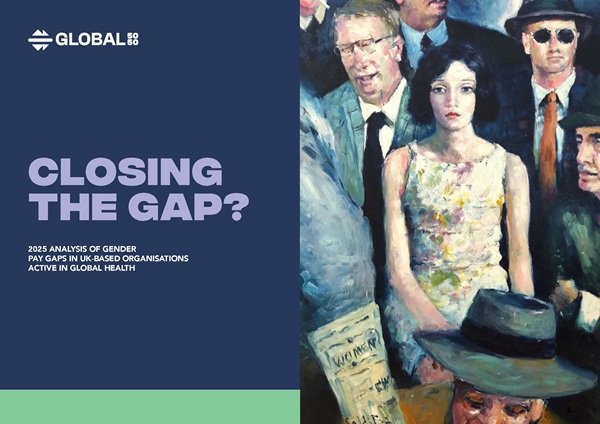
Our latest analysis of UK-based global health organisations found a persistent gap – and a striking pattern: even after accounting for factors like year, organisation size, and for-profit or non-profit status, organisations led by women CEOs have a smaller gender pay gap – by about 4.3 percentage points – than those led by men. The data also show that the longer an organisation has had a woman CEO, the smaller its pay gap tends to be. The report sparked debate across sector outlets and mainstream media (including Stylist), elevating calls not just for reporting but for governance levers that close gaps such as leadership tenure, transparent pay audits, and board-level accountability.

This is Gender (TiG): Photography on the Frontlines of Justice
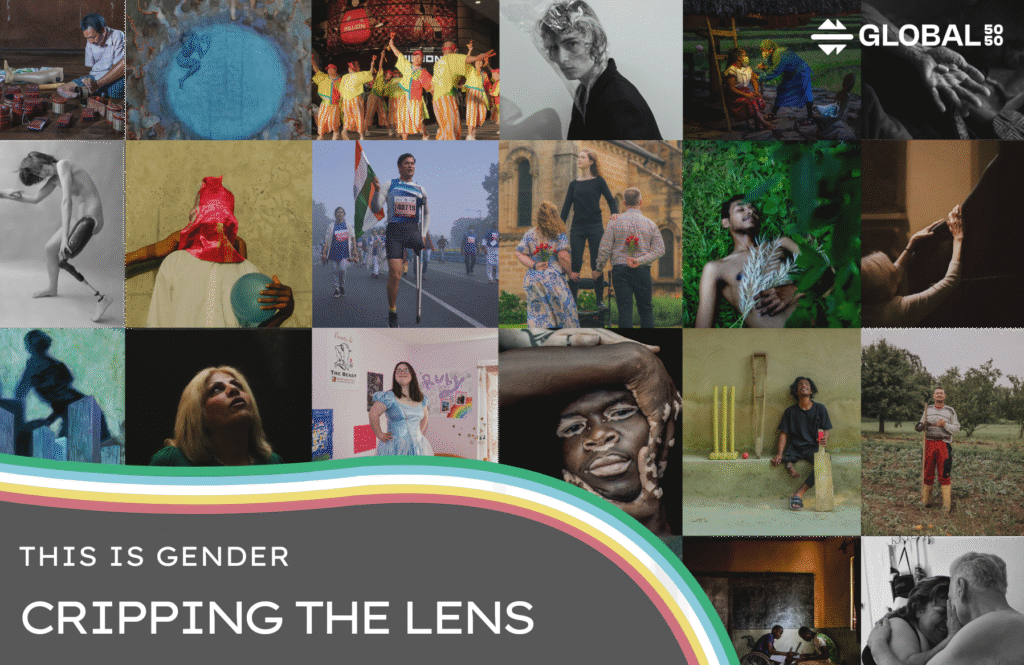
TiG – our living collection of images from 140+ locations – pushed back against the drift toward AI-generated imagery with visual practices grounded in consent, context, and authorship. This year we launched Cripping the Lens, an exhibition centring disability; heartfelt thanks to our international panel of judges and all contributors, and warm congratulations to the winning photographers. Through exhibitions, dialogues, and our latest collection, Counter-records, TiG underscored that visual evidence isn’t cosmetic – it shapes what we see, and therefore what we fund, prioritise, and protect.
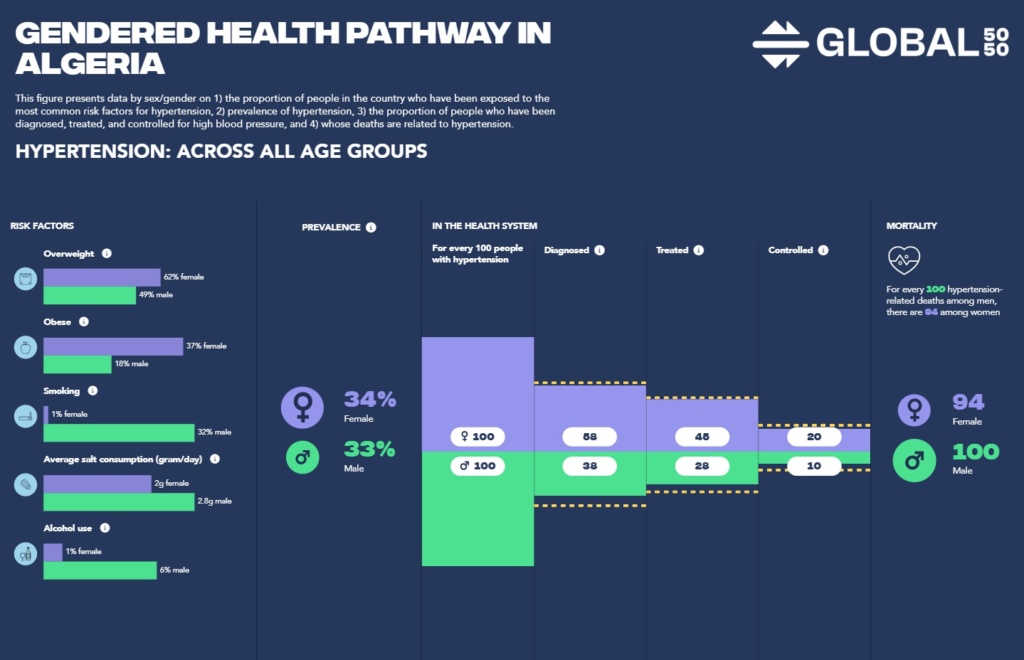
We advanced our first-of-its-kind public tool that visualises sex-disaggregated pathways for hypertension, diabetes and HIV – from exposure and risk through diagnosis, treatment and control. Pathways makes equity legible: planners can “see the drop-offs” immediately, pinpoint where women’s and men’s experiences diverge across the life course, and target gender-responsive interventions where they will have most impact.
In parallel, we helped drive the evidence base – co-authoring peer-reviewed papers with Angela Chang and colleagues on sex-disaggregated data and the roles of sex and gender in health – showing how the Pathways tool rests on rigorous methods as well as practice.
What we heard
- Rollback has costs. From New York to Delhi, partners described shrinking civic space, weaponised attacks on gender policy, abrupt defunding, staff layoff, and curtailed SRHR services.
- Accountability tools are in demand. Policymakers, funders, and journalists asked for clear, decision-ready evidence – and several organisational leaders told us they’ve updated policies on the back of our reports.
- Representation underwrites legitimacy. When rooms lack gender and regional diversity, policies land slower and may face backlash – witness how negotiations on the WHO pandemic accord bogged down amid repeated concerns that LMIC and civil-society voices weren’t sufficiently reflected in key provisions, eroding trust and delaying consensus.
- Visual justice is policy relevant. In our TiG installations and sessions, leaders and staff agreed that the images they use shape risk perception and priority-setting; several concurred with our principles to swap generic stock for locally authored work and add explicit consent/credit standards.

‘Marked’ by Lela Edgar
How we worked
- Evidence with a spine. We tightened methods, consulted more, and published detailed methods and indicator definitions alongside key analyses.
- Coalitions over silos. We convened lawyers, economists, clinicians, artists, and activists. Because shifting systems requires coalitions of diverse expertise.
- Open tools, open conversations. Our indices, datasets, and visualisations are built for reuse, so advocates and decision-makers can cut their own lenses on the same evidence.
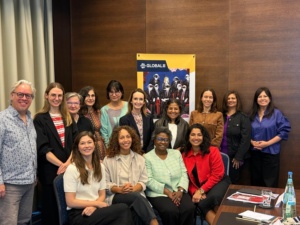
Global 50/50 Workshop on ‘Measuring Feminist Leadership’
Looking ahead
- Global Justice 50/50 (inaugural report, early 2026). A first-ever assessment of 171 law and justice institutions, covering gender parity in leadership, policy quality, and North–South representation, introduced by a Foreword from María Fernanda Espinosa Garcés (former President of the UN General Assembly). The aim: catalyse accountability for the institutions that arbitrate rights, representation, and redress.
- Be a part of the report launch. Join our webinar on Wednesday 18th February. Register now
- From pay-gap disclosure to closure. We’ll support organisations to move beyond compliance to outcome-oriented governance changes that shrink gender pay gaps.
- Pathways to Health Equity. We’ll extend Gendered Health Pathways to user-generated, country-level intersectional Health Equity Pathways that inform policy and budgeting.
- Operationalising feminist principles. Building on our 2025 convenings, we’ll offer tools and peer learning for organisations ready to translate values into policy and practice – across recruitment, care policies, safeguarding, and leadership culture.
- New conversation series. We will continue to bring together progressive partners around the world, including in our first annual “Global 50/50 in Conversation”. In March, we will welcome gender theorist Raewyn Connell and other global voices to discuss inequalities, authoritarianism, and the manosphere. Stay tuned for the Eventbrite invitation.

‘First Judge’ by Mohamed El Raai
Towards Gender Justice as part of a “moral revolution”
The Reith Lectures called for a moral revolution – ambition equal to the scale of today’s crises. We agree. And we choose hope with resolve: not a naïve optimism, but the conviction that change is made by those who show up. We will continue in solidarity with others to hold the line. A crucial part of that work is keeping gender in the frame. When the term is scrubbed from policy, we erase the social relations and power dynamics that drive inequity; what remains is a thin biological story about “sex differences” that can’t explain the basis of care burdens, violence, pay gaps, or who gets turned away from services. Losing that lens makes injustice harder to see – and easier to excuse.
Like many in our sector, we saw a major funding cut in 2025 – a result of the wider backlash against equality. We chose to stand by our principles. That is how norms are built and kept. Silence is not neutral – but allows hard-won progress to erode without scrutiny or consequence.
We’re grateful to our partners, advisors, trustees, and community for sharing our stubborn optimism and real-world impact in a difficult year. Let’s carry that moral ambition into 2026 – acting together, as agents of change, to make gender justice non-negotiable.
Get involved