
If the fish are dying, look at the water Next item Raising the Bar: What the...

If the fish are dying, look at the water

Three experts on what public health keeps getting wrong about men’s health — and what it would take to get it right


Men’s Health Week has no global theme this year. Perhaps that is an invitation to ask a harder question than awareness campaigns usually allow: not what are we doing for men’s health, but why are we getting it wrong?
For nearly a decade, Global 50/50 has built its work around a single truth that gender shapes health outcomes for everyone. Not just women, not just in clinics, but across the whole of societies.
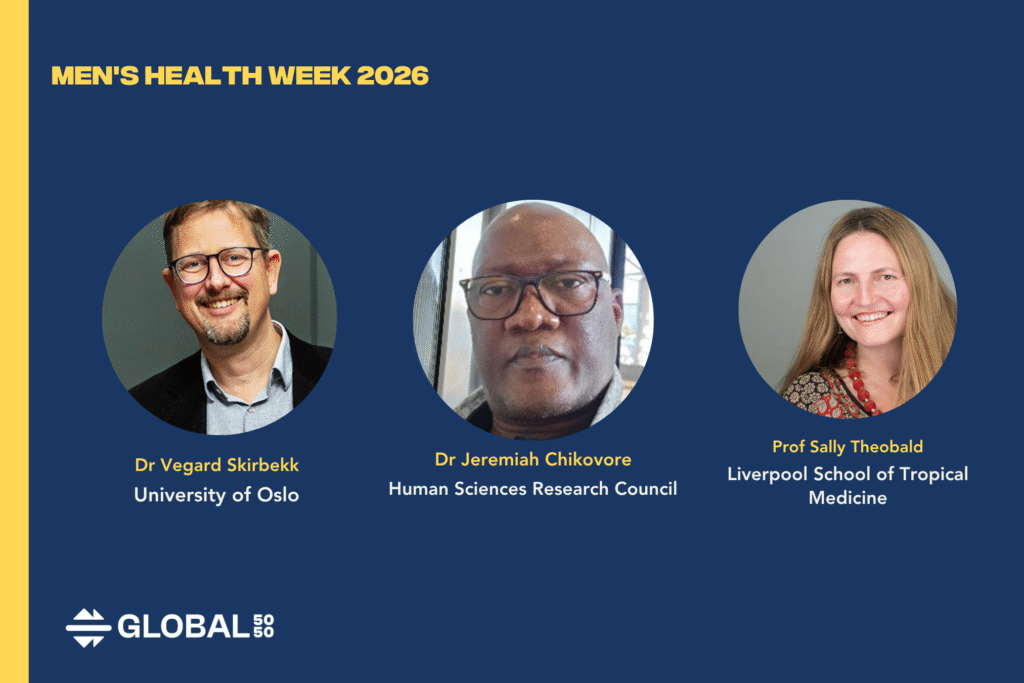
In May 2026, researchers and practitioners gathered at the Brocher Foundation on the shores of Lake Geneva for a workshop on sex, gender and health and men’s health surfaced as a recurring thread. Afterwards, Global 50/50 spoke to three of the participants, Sally Theobald, Jeremiah Chikovore, and Vegard Skirbekk about what the field keeps getting wrong, and what it would take to get it right.
 

Blaming the fish

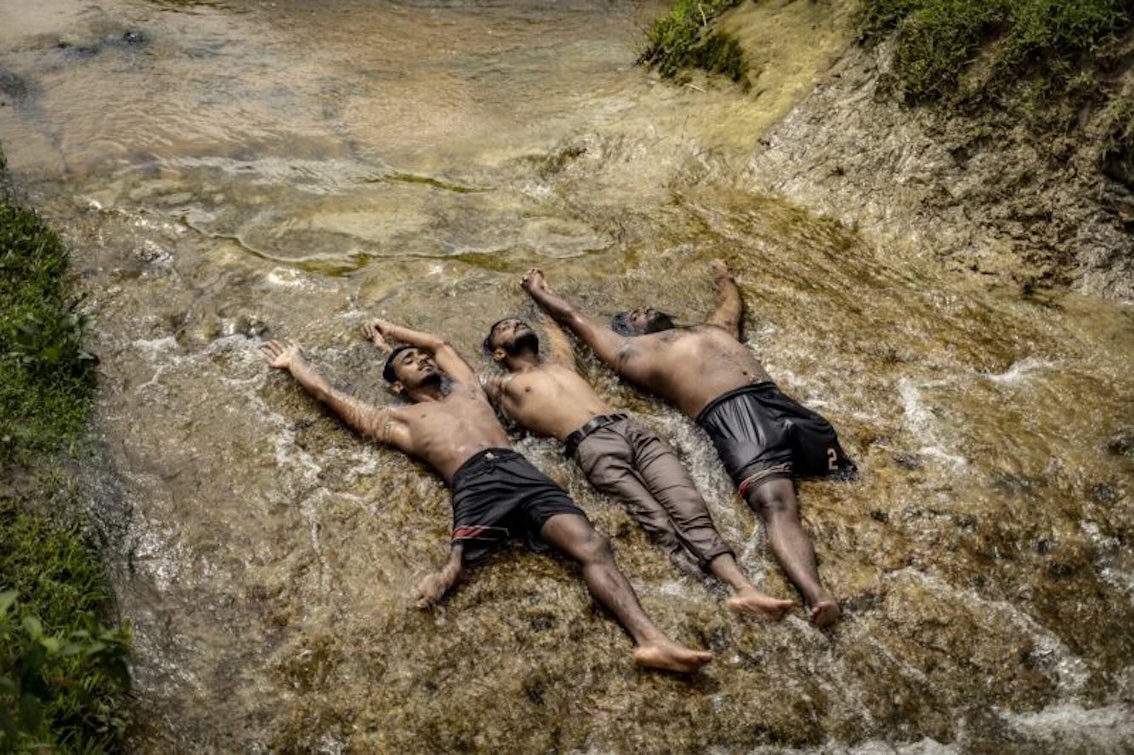
At a men’s health conference last year, the campaign group Movember offered a metaphor that Sally Theobald has not forgotten. If all the fish in a pond were dying too young, we wouldn’t blame the fish — we’d look at what’s wrong with the water. Theobald, a health systems researcher at the Liverpool School of Tropical Medicine, invokes it to describe where the field keeps going astray:

“If we see men’s health outcomes mainly because of poor choices, we will keep investing in awareness campaigns and behaviour change messaging,” she says. “If we understand them as shaped by gendered social, commercial and structural determinants, then the focus shifts towards systems and reducing social and economic disadvantage.”

Men die earlier than women in almost every country in the world. Yet as Jeremiah Chikovore, a sociologist at the Human Sciences Research Council in South Africa, points out, the field that produced all that mortality data has invested remarkably little in understanding what drives it.

“The health field historically applied a gendered lens only to women, largely through reproductive health,” he says. “Men were treated as the ‘default body’, and hence their specific vulnerabilities were not problematised. Knowledge about male physiology was produced, but not about the social experience of being a man and what that does to health.”

The costs have been measurable. Male depression gets coded as a behavioural problem. Occupational injury gets filed under labour policy. Male suicide sits in an epidemiological category of its own, rarely interrogated as a gendered phenomenon with gendered causes and gendered solutions. And funding has followed: research on prostate cancer, suicide, and occupational disease operates, as Chikovore puts it, with researchers “in relative isolation from one another” and without the sustained advocacy infrastructure that has, rightly, driven progress in women’s health.

The gap is not biological fate

The male-female life expectancy gap may be visible in nearly all countries, but it is not fixed. In Norwegian municipalities with the most favourable social conditions, the gap in life expectancy approaches zero. That is hard to explain biologically.

Vegard Skirbekk, a demographer at the Norwegian Institute of Public Health who leads the ERC-funded HOMME project, one of the most systematic efforts to understand male longevity across settings, has documented communities where men’s and women’s life expectancies nearly converge.

“We are identifying specific communities and contexts where men not only survive but thrive with long lives close to matching female life expectancy. We also need to understand why inequality among men is so high — and much higher than among women. This variation challenges the idea that the gap is purely biological and inevitable.”

What produces those communities? Meaningful work, reduced isolation, better education and employment pathways, environments that reduce rather than reward self-destructive risk. Skirbekk is clear that men’s excess mortality is “overwhelmingly behavioural, social and commercial rather than biological: risk-taking, low help-seeking shaped by masculinity norms, occupational hazards, and industries, including tobacco, alcohol, gambling, ultra-processed food, that disproportionately target men.”

Yet, the commercial determinants of men’s health, the industries that actively profit from male mortality, remain conspicuously absent from most Men’s Health Week conversations. The Brocher workshop was explicit: the alcohol industry constructs and exploits masculine norms and social isolation; ultra-processed food manufacturers exploit the gendered burden of care and time poverty. But public health has been slow in designing responses to these harms.

The narrow frame and what it costs

For decades, “gender and health” has effectively meant reproductive health for women aged 15 to 49. All three experts converge on the same verdict, that framing has cost everyone.

It has cost men targeted policy attention on suicide, mental health, occupational disease, and the chronic conditions, cardiovascular disease above all, that kill them early. It has also cost women. As Theobald notes, the reproductive frame reduces women to their childbearing capacity, leaving the health needs of adolescent girls, older women, and anyone outside the reproductive window systematically underserved. The 15-to-49 age band for women is an administrative convention inherited from population policy but it’s not a biological standard. There is no equivalent for men at all.

Chikovore adds something that rarely appears in these analyses: the frame costs families. He recalls attending a child health clinic as a young father in the late 1990s, only to be greeted by nurses with the comment, half joking: “Where is the mom? We want moms here; we are used to having moms, not you fathers.” That moment, he argues, captures something enduring about the many ways men become distanced from healthcare — not because they don’t want to be there, but because systems are designed around their absence. “Men are significantly less likely to visit a doctor regularly,” he says, “and when they do, they often present with more advanced disease. Yet the stereotype of men as reluctant health-seekers can be misleading: the bigger problem might lie less in male resistance than in health system design, and the gender relations architecture that governs how men are made to function every day.”

The pond public health ignores

The most urgent version of the neglected-pond problem is the manosphere. All three researchers agree: online ecosystems built around male grievance and misogyny have become a public health issue that the field has been dangerously slow to recognise and public health’s failure to engage is itself part of the problem.

The manosphere does not manufacture men’s problems. It exploits real ones: loneliness, unemployment, poor mental health, economic marginalisation. But public health’s failure to engage with men where they are, including online, has left a vacuum, and the vacuum has been filled.

“The harms are measurable and population-level: increased misogynistic violence, suicide risk, radicalisation, and the erosion of young men’s capacity for healthy relationships and social connection,” says Chikovore. “These meet any reasonable threshold for public health concern. But medicalising or securitising the response risks missing the point. The more useful frame is upstream prevention: investing in the socio-economic conditions, mental health infrastructure, and genuinely inclusive masculinity narratives that reduce vulnerability to recruitment in the first place.”

Theobald goes further on the question of urgency: “The manosphere and its impacts are growing globally and have wide-reaching ramifications for public health for all — women, men, and others. If public health does not engage with gender and men’s health, we risk discussions about masculinity and men’s struggles being shaped by other actors, including dominant voices in the manosphere.” The response, she argues, requires a twin-track approach: simultaneously reducing the harms associated with manosphere content while addressing the underlying structural determinants that draw men to it in the first place.

Changing the water

Men’s Health Week is a week. Changing the water is a longer project. But the Brocher workshop made one thing clear: in communities where the social conditions are right, the life expectancy gap between men and women approaches zero. Male disadvantage is not biological destiny and it’s not a niche concern.

As Dr Chikovore puts it, “Men’s health is a global equity issue. If we neglect it, we allow the deepening of social divides and the fuelling of toxic movements that exploit male disadvantage. But if we embrace a gender lens that includes men, we can build healthier, more resilient societies where everyone benefits.”


Global 50/50 thanks Prof Sally Theobald, Dr Jeremiah Chikovore, and Prof Vegard Skirbekk for their time and generosity in sharing their expertise and perspectives.

Annex: Full interviews

The following are the full written responses from each researcher, lightly edited for length and clarity.

Prof. Sally Theobald

Liverpool School of Tropical Medicine

What are one or two data points or findings about men’s health that you think readers will find surprising or counterintuitive?

At a men’s health meeting I attended last year, the campaign group Movember used the metaphor of “fish in a pond”: if all the fish in a pond were dying too young, we wouldn’t blame the fish — we’d look at what’s wrong with the water. This highlights the need to better understand and address the social, economic, commercial, and structural factors that affect men’s health. Without this perspective, we risk blaming individual men for their health outcomes, rather than recognising the wider influences at play. What we miss is an analysis of how masculinity intersects with poverty, education, employment, ethnicity, age, and place to shape behaviours, treatment-seeking, and health outcomes. We need an intersectional approach — one that recognises how gender interacts with broader social determinants. Men facing economic insecurity, social isolation, or precarious work often have particularly poor health outcomes, yet interventions rarely address these gendered structural factors.

Men die younger than women in almost every country, yet the social, commercial, and structural factors behind this gap are still not well understood or sufficiently addressed. Why has the field been slow to apply a gendered lens to men’s health, and what are we missing as a result?

First, it sidelines men’s health from gender analysis. Men experience distinct patterns of illness and death, shaped by gender norms, occupational risks, social expectations, and structural factors. An intersectional lens is needed to understand how gender intersects with other inequalities — race, poverty, sexuality, disability — to shape experiences and outcomes. Second, this framing reduces women’s health to their reproductive capacity. It implicitly prioritises women during their childbearing years, while paying less attention to adolescent girls and women over 49. Issues such as menopause, cardiovascular disease, mental health, and non-communicable diseases have historically received far less attention than sexual and reproductive health, despite being major contributors to women’s wellbeing and quality of life.

For decades, “gender and health” has effectively meant reproductive health for women aged 15–49. What does it cost us to keep operating with that frame?

A gendered approach to men’s health is not about competing with women’s health agendas. Gender equity should not be conceptualised as a zero-sum game. An intersectional understanding of power suggests that challenging hegemonic masculinities can produce benefits for women, men and others while advancing broader goals of social justice and health equity. Many of the gender norms that contribute to men’s poor health — such as expectations of toughness, self-reliance, risk-taking and emotional restraint — also influence violence, caregiving, relationship dynamics and health-seeking pathways. Addressing these norms can therefore generate benefits for men, women, non-binary people and broader communities.

Men’s Health Week is a valuable opportunity to spotlight neglected issues — but it can also inadvertently reinforce the idea that men’s and women’s health are competing priorities. How do we use moments like this to advance a gender approach that works for everyone, without that becoming cover for shifting resources and attention away from women?

A key insight from the LIGHT research programme at Liverpool School of Tropical Medicine, which focuses on tuberculosis in different African contexts, is that men’s health outcomes are shaped not only by biology or individual behaviour, but by wider social, economic and gendered pathways. Factors such as poverty, education, employment conditions, social isolation, and access to healthcare interact with gender norms and expectations to influence health risks and outcomes. Men account for the majority of TB cases globally and are disproportionately represented among those who remain undiagnosed. Gender-responsive services include active case-finding in places where men congregate, workplace screening, community outreach, flexible opening hours, and reducing the direct and indirect costs of seeking care. Importantly, there is no single male experience. Taking an intersectional approach and co-designing interventions with diverse groups of men from disadvantaged communities is critical to developing effective, context-specific health responses.

Social factors like income, education, and isolation appear to drive much of the variation in men’s health outcomes across countries. What does that tell us about where interventions should be targeted, and what would gender-responsive interventions actually look like?

The manosphere evolves through social media ecosystems that move much faster than government or public health responses. The manosphere and its impacts are growing globally and have wide-reaching ramifications for public health for all — women, men and others. It should definitely be treated as a public health issue. If public health does not engage with gender and men’s health, we risk discussions about masculinity and men’s struggles being shaped by other actors, including dominant voices in the manosphere. We need a twin-track approach: simultaneously reducing the harms associated with manosphere content whilst addressing the underlying determinants of men’s health and wellbeing that draw men to it in the first place. Men’s wellbeing matters — and misogyny can be harmful to women, men and others.

Dr. Jeremiah Chikovore

Chief Research Specialist, Human Sciences Research Council, South Africa

What are one or two data points or findings about men’s health that you think readers will find surprising or counterintuitive?

A counterintuitive aspect of men’s health is the male disadvantage in life expectancy. Globally, according to WHO, women live about six years longer than men, and the gap is wider in higher-income countries. While biology does appear to have some role, the data show wide variation depending on where men live — variation that nearly disappears or reverses in some settings. This reiterates a consistently important position: the gap is defined by social determinants of health, and therefore excess male mortality is preventable. Another paradox is that while men die earlier, they often report better self-rated health than women until very late in life — suggesting men may under-recognise or under-report illness, leading to delayed care. Men are significantly less likely to visit a doctor regularly, and when they do, they often present with more advanced disease. Yet the stereotype of men as reluctant health-seekers can be misleading: the bigger problem might lie less in male resistance than in health system design, and the gender relations architecture that governs how men are made to function every day.

Men die younger than women in almost every country, yet the social, commercial, and structural factors behind this gap are still not well understood or sufficiently addressed. Why has the field been slow to apply a gendered lens to men’s health, and what are we missing as a result?

The health field historically applied a gendered lens only to women, largely through reproductive health. Men were treated as the ‘default body’, and hence their specific vulnerabilities were not problematised. Knowledge about male physiology was produced, but not about the social experience of being a man and what that does to health. We miss opportunities to address preventable causes of early male mortality, such as suicide and occupational hazards. We have a field that can tell a great deal about the male cardiovascular system, but still relatively little about how male gender norms shape the behaviours and exposures that damage it. Men’s health has also struggled to attract the sustained advocacy infrastructure that has, rightly, driven progress in women’s health — leaving the field fragmented, and researchers working on male suicide, occupational disease, or health-harming masculinities operating in relative isolation from one another.

For decades, “gender and health” has effectively meant reproductive health for women aged 15–49. What does it cost us to keep operating with that frame?

As a young father in the late 1990s, I recall taking my three-year-old son to a child clinic. The attending nurses remarked aloud in the waiting area: “Where is the mom? We want moms here; we are used to having moms, not you fathers.” Looking back, the interaction reveals something about the many ways men become distanced from healthcare services — not only is the expectation that mothers are the default caregivers; men’s attendance at clinics disrupts norms both in society and within healthcare settings. Operating within a narrow frame costs us a holistic understanding of health across the lifespan. Male depression gets coded as a behavioural problem. Male occupational injury gets filed under labour policy. Male suicide — which accounts for the majority of suicide deaths in most countries — sits in an epidemiological category of its own, rarely interrogated as a gendered phenomenon with gendered solutions. The cost lies in millions of premature deaths, economic losses, and intergenerational impacts on families.

Men’s Health Week is a valuable opportunity to spotlight neglected issues — but it can also inadvertently reinforce the idea that men’s and women’s health are competing priorities. How do we use moments like this to advance a gender approach that works for everyone, without that becoming cover for shifting resources and attention away from women?

Men’s Health Week should be framed as a moment to spotlight men’s health promotion as a shared societal good, benefiting not only men themselves, but also their families, children, and communities. This week should not be positioned as a zero-sum competition. Messaging can highlight the shared determinants of health — poverty, stress, access to care — that affect women, men, and children alike. Policymakers can emphasise complementarity: investing in men’s health strengthens communities without diminishing women’s health priorities. By showcasing interconnectedness, Men’s Health Week can advance a narrative where gender-responsive health is about inclusivity, equity, and mutual benefit — part of expanding the gender lens, not redirecting it.

Social factors like income, education, and isolation appear to drive much of the variation in men’s health outcomes across countries. What does that tell us about where interventions should be targeted, and what would gender-responsive interventions actually look like?

While social and gender norms often cast men as holders of social and relational power, their health and wellness depend on how they are positioned in society. A factory worker facing economic insecurity, an isolated older man, and a highly educated professional may all benefit from the gender dividend, but their health risks and opportunities differ markedly. Men from lower-income communities and countries die much earlier than men at the top of the income distribution. Gender-responsive interventions must move beyond blanket approaches. When targeting interventions, upstream structural action on wages, housing security, employment conditions, and educational opportunity can do more for men’s health in aggregate than awareness campaigns urging men to see their doctor. Context-relevant, co-created interventions that work within existing social infrastructure for men — rather than against it — are what will work.

The manosphere preys on real, measurable disadvantages in men’s health and wellbeing, including social isolation, poor mental health outcomes and economic marginalisation. Why has public health been so slow to respond to this — and do you think the manosphere should be treated as a public health issue?

Public health has been slow because it traditionally avoids engaging with online subcultures, and because acknowledging men’s grievances risks being misinterpreted as undermining women’s struggles. Yet the manosphere likely thrives precisely because these grievances are real: loneliness, unemployment, and untreated mental health issues. Young men in distress have rarely been treated as a priority population — that neglect leaves them searching for belonging and identity in spaces outside health and policy frameworks. So yes, the manosphere should be treated as a public health issue. It exploits health vulnerabilities, and ignoring it cedes ground to toxic influencers who weaponise men’s pain into misogyny and extremism. The harms are measurable and population-level: increased misogynistic violence, suicide risk, radicalisation, and the erosion of young men’s capacity for healthy relationships. The more useful frame is upstream prevention — investing in the socio-economic conditions, mental health infrastructure, and genuinely inclusive masculinity narratives that reduce vulnerability to recruitment in the first place.

Dr. Vegard Skirbekk

Norwegian Institute of Public Health

What are one or two data points or findings about men’s health that you think readers will find surprising or counterintuitive?

One surprising finding is that the female-male life expectancy gap can narrow dramatically — or even nearly disappear — in certain settings, challenging the idea that it’s purely biological and inevitable. Through our ERC-funded HOMME project, which I lead, we’re identifying specific communities and contexts where men not only survive but thrive with long lives close to matching female life expectancy. We also need to understand why the inequality among men is so high and much higher than among women.

Men die younger than women in almost every country, yet the social, commercial, and structural factors behind this gap are still not well understood or sufficiently addressed. Why has the field been slow to apply a gendered lens to men’s health, and what are we missing as a result?

The field equated “gender” with “women” for historical reasons of gender discrimination. Some political activists may view men as the privileged default who didn’t need attention. There is insufficient focus on male health, as gender-focused discussions on health commonly focus on women, and particularly issues related to reproduction. We know that men have shorter lives. We do not know, even if it is commonly suggested, that men have better health. Men are using health services to a much lower degree, and men participate far less in health surveys — particularly those with low socioeconomic status. As a result, we’re missing opportunities to understand and address how social norms, economic pressures, and structural factors shape male behaviours. The key is finding better ways to channel typical male behaviours and risk-taking into productive rather than self-destructive directions.

For decades, “gender and health” has effectively meant reproductive health for women aged 15–49. What does it cost us to keep operating with that frame?

Male health issues have always existed, but achieving greater equity in life expectancy has rarely been a priority in policymaking. Continuing with a narrow frame costs us lost years of life, higher societal burdens from premature male mortality, and missed opportunities for holistic gender-responsive policies that benefit entire populations. Men’s excess mortality is overwhelmingly behavioural, social and commercial rather than biological: risk-taking, low help-seeking shaped by masculinity norms, occupational hazards, and industries — tobacco, alcohol, gambling, ultra-processed food — that disproportionately target men.

Men’s Health Week is a valuable opportunity to spotlight neglected issues — but it can also inadvertently reinforce the idea that men’s and women’s health are competing priorities. How do we use moments like this to advance a gender approach that works for everyone, without that becoming cover for shifting resources and attention away from women?

Aligning male-female mortality more closely would deliver huge benefits for all, perhaps particularly women. More men alive means fewer brotherless, sonless, partner-less and fatherless women. This would represent an important social, economic, practical and emotional gain. We should see it as a win-win: closing the mortality gap would deliver benefits for families and communities that flow especially to women. A truly gender-responsive approach strengthens outcomes for everyone without pitting groups against each other.

Social factors like income, education, and isolation appear to drive much of the variation in men’s health outcomes across countries. What does that tell us about where interventions should be targeted, and what would gender-responsive interventions actually look like?

This variation shows that interventions should target social determinants — particularly in lower-income or isolated communities where risks are highest. Gender-responsive interventions would identify and scale up communities and settings where men thrive: places that support productive, meaningful, long lives through positive social roles, reduced isolation, better education and employment pathways, and environments that align with male strengths and behaviours. We should use gender-specific approaches that meet men where they are — workplaces, sports clubs, online — rather than waiting for them to show up at a clinic.

The manosphere preys on real, measurable disadvantages in men’s health and wellbeing, including social isolation, poor mental health outcomes and economic marginalisation. Why has public health been so slow to respond to this — and do you think the manosphere should be treated as a public health issue?

Public health has been slow because it often fails to engage men where they are — academia and official messaging rarely reach those most in need. The manosphere fills this vacuum by addressing real disadvantages (isolation, mental health, economic marginalisation), but often with harmful framing. Yes, it should be treated as a public health issue. We need to popularise evidence-based approaches that actually benefit men: channelling risk-taking productively, while promoting positive masculine ideals. Very few men read academic papers; effective solutions must be freely accessible, instantly available, resonant, and action-oriented.